Your first show as a first-time exhibitor arrives with a specific quality of uncertainty. You know roughly what the experience will involve, and you have probably attended shows as a visitor.
But being on the other side of the stand is very different. You are responsible for a physical presence that represents your brand to hundreds or thousands of strangers, and that comes with practical challenges nobody thinks to tell you about in advance. This article is the briefing you should have received before you booked your first space.
The Things That Surprise First-Time Exhibitors Most
Before the practical guidance, it is worth naming the surprises that most consistently catch first-time exhibitors out. Awareness of them is the first step to managing them.
The first is how much the show costs beyond the space fee. The headline cost of your exhibition space is typically the smallest single element of the real total. Then come graphics, stand design and build, transport, installation, staff travel and accommodation, pre-show marketing, and post-show follow-up. Together, they frequently bring the total to two to three times the space fee alone. Going into your first show with only the space fee budgeted is a common and expensive mistake.
The second is how physically demanding the experience is. Three days on a stand means standing for eight to ten hours, keeping up genuine enthusiasm and quality of conversation throughout, and processing the noise and stimulation of a busy show hall. It is exhausting in a way that is hard to anticipate from the outside. Plan for recovery time after the show. Brief your team that energy management is a professional responsibility, not a personal weakness.
The third is how much depends on preparation rather than performance. The quality of your conversations on the day is largely determined by decisions made weeks before the show. Those decisions include how well you have defined your objectives, how carefully you have briefed your team, and how much pre-show outreach you have done. First-time exhibitors who discover this after the show ends tend to wish they had known it before.
The Six-Week Preparation Window You Cannot Afford to Ignore
If one structural insight makes the biggest difference for first-time exhibitors, it is this: the six to eight weeks before the show opens are more commercially important than the days of the show itself. This is when you do the work that shapes everything on the show floor. It determines whether your conversations are warm or cold, whether the right visitors find your stand or walk past it, and whether your team arrives confident or anxious.
In this window, do the following. Define your specific objectives for the show in measurable terms. Not ‘generate leads’ but ‘have 30 qualified conversations with procurement-level contacts at companies with more than 100 employees.’ Share the registered attendee list with your sales team and identify the 20 people you most want to speak with.
Have a named individual reach out to those people personally, not through a generic marketing email, with a specific reason to visit your stand. Brief your stand team on the objectives, the target visitor profile, the two or three conversation openers that work, and the data capture process. And make sure your graphics and messaging are finished in time for production, not rushed in the final week.
Choosing Your Stand Position
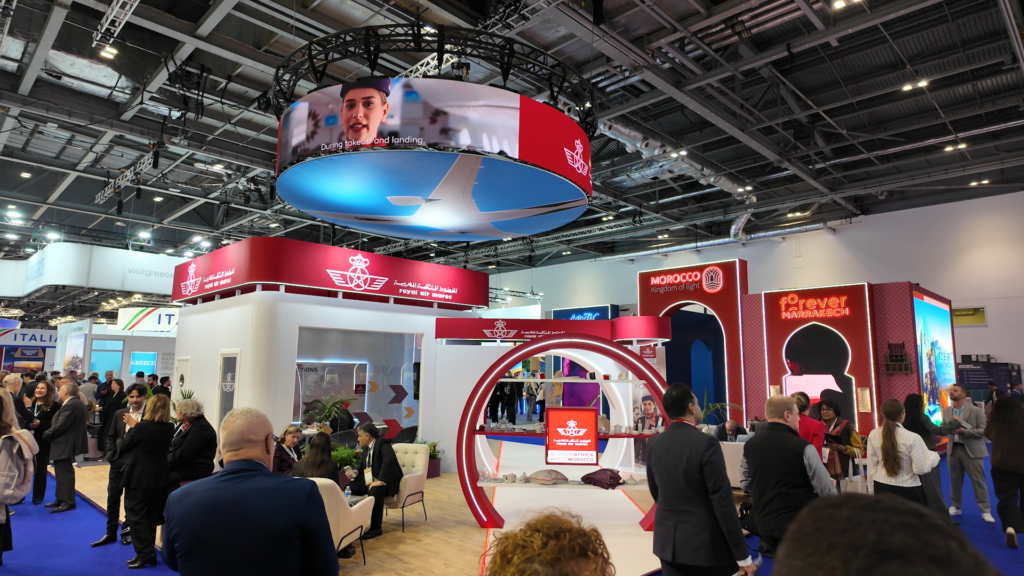
First-time exhibitors often accept the floor position they are given without negotiating. This is understandable, because the whole booking process is unfamiliar. But position on the show floor has a significant impact on footfall. It is worth investing time in understanding the floor plan before accepting a space.
Ask the organiser where the main entrance is and which routes visitors take from the entrance into the hall. Ask where the catering and coffee areas are, since high dwell-time areas generate footfall in the surrounding spaces. Ask whether corner positions are available. These are open on two sides rather than one, and corner stands almost always outperform inline stands of the same size. And if you are offered a space in a low-traffic area of the hall, ask whether there is anything comparable in a better position, even at a slight premium. The difference in footfall can be significant enough to justify the additional cost.
What Your Stand Actually Needs to Communicate
First-time exhibitors often try to put too much on their stand. The instinct is understandable: you want visitors to understand everything about what you do. But the way visitors engage with stands means that too much information has the same effect as too little. People cannot absorb it quickly enough, and they move on.
Your stand needs to communicate one thing from a distance: a specific, relevant reason for your target visitor to stop. This is not your company name and it is not a list of your services. It is a statement, such as a problem, a provocation or a claim, that creates recognition in the visitor profile you are trying to attract. Everything else can be in the conversation.
The Conversations Your Team Needs to Be Ready For
Brief your team on three things before the show opens.
First, the opening. This is how to start a conversation with a passing visitor naturally, without the ‘Can I help you?’ that invites ‘just browsing.’ A specific, relevant question that relates to a problem your business solves works much better.
Second, the qualification. These are the two or three questions that quickly establish whether the person you are talking to is extremely relevant: their role, their organisation, their timeline.
Third, the next step. This is what you are trying to achieve from every qualifying conversation, and how you propose it. A meeting booked. A call agreed. A specific follow-up sent. Every productive conversation should end with a clear next step, proposed by your team.
Data Capture: Do Not Lose What You Worked to Generate
One of the most common first-time exhibitor mistakes is poor data capture. Contacts are written on scraps of paper and business cards are collected without notes. By the time the show ends, the context of every conversation has been lost. The CRM entry that says ‘contact from show’ is commercially worthless.
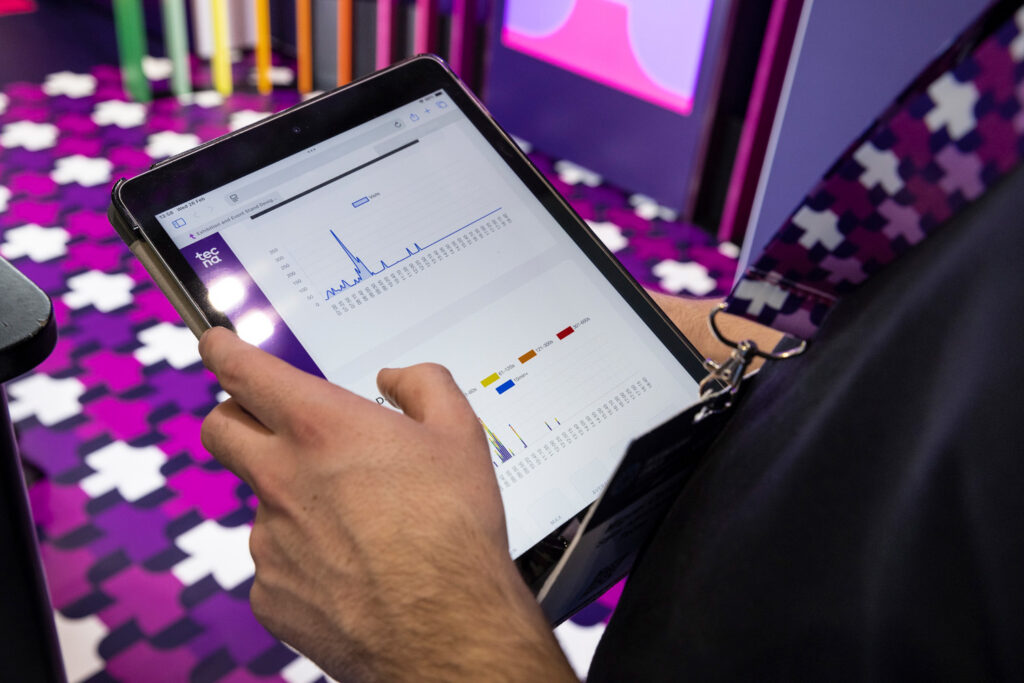
Before the show, agree on a data capture process. It should record the contact’s details, their role and company, the specific challenge or interest they expressed, and the agreed next step. This can be a form on a tablet, a structured note in a phone app, or a simple paper template. The technology matters less than the consistency. And brief the team to complete the capture at the end of each conversation, before moving on, while the details are fresh.
The 48 Hours After the Show
The value of the leads you generated decays faster than most first-time exhibitors expect. A contact who had a warm conversation with your team on Wednesday will feel differently about your brand by the following Monday, and differently again by the following Friday. The follow-up window is short. The businesses that use it well consistently convert at higher rates than those who follow up two weeks later.
Within 48 hours of the show closing, every qualifying contact should receive a personalised message that references the specific conversation you had. Not a generic show follow-up with your brochure attached. The message should make clear that you remember who they are and what you discussed, and it should propose a specific and easy next step. This level of personalisation requires the data capture to have been good. It is another reason why what happens during the show determines what is possible after it.
What to Learn From Your First Show
Your first exhibition will not go perfectly. Some conversations will not land. Some elements of the stand will not work as planned. Some of your pre-show assumptions will turn out to be wrong. This is normal, and it is not a reason for concern. The businesses that become highly effective exhibitors over time treat every show as a learning event as well as a commercial event. They document what they learn and apply it before the next one.
Within a week of returning, write down three things that worked better than expected and three things you would change. Be specific. Not ‘the messaging was not quite right’ but ‘the headline on the back wall was not visible from the main aisle, and we need to rethink the focal point.’ Those specific observations, acted on, are the compound investment that makes your second show significantly better than your first.
Tecna works with first-time and experienced exhibitors across a wide range of UK and international shows. If you are preparing for your first exhibition and want to start with the right foundations, we are happy to help you think it through before you commit.
Get in touch with our experts in events today