Want to stop people in their tracks? Experiential marketing is how you do it.
It’s bold. It’s immersive. And when done right, it’s unforgettable. In a digital-first world, experiential campaigns cut through the clutter.
At Tecna, this is what we’re built for. For over 20 years, we’ve been helping brands turn big ideas into interactive, high-impact experiences that people remember, share, and love.
Ready to see the real benefits of experiential marketing? From deeper engagement to long-term brand loyalty, here are 15 reasons it deserves a place in your strategy.
Let’s go.
What is experiential marketing?
Experiential marketing (or engagement marketing) is the art of creating live, immersive brand experiences that people don’t just see – they feel.
Think exhibition stands that invite people in through interactive features, not just display messaging. Live product demos that spark genuine interest. Hands-on zones and creative spaces that pull people closer.
It’s marketing that moves people because they’re part of it.
While traditional marketing methods focus on telling people who you are, experiential gives them a chance to discover it for themselves. It creates emotion, builds connection, and leaves a lasting impression.
And right now, that’s exactly what audiences are looking for. With so much noise online, they’re seeking something more human, more engaging – something that feels real.
What are the benefits of experiential marketing?
When you bring your brand to life through experience, you unlock a whole new level of engagement. Below, we’ll explore the top 15 ways experiential marketing can drive results and spark genuine connections, one unforgettable moment at a time.
Want to see these benefits in action? Dive into our blog packed with standout experiential marketing examples that show exactly how bold ideas become brand moments: 15 Experiential Marketing Examples
1. Creates memorable experiences
Experiential marketing gives people something they won’t just see, they’ll remember. Why? From a psychological perspective, people remember what they feel.
In a large Delphi study involving brand experts, agency leaders, and academics, there was strong agreement that experiential marketing positively affects brand recall, brand consideration during future buying decisions, and the overall presence of the brand in a consumer’s memory. In other words, the more immersive the experience, the more likely your brand stays front-of-mind – not just during the moment, but long after it’s over.
2. Boosts brand awareness and recognition
Whether it’s an eye-catching exhibition stand, a creative product demo, or an immersive installation that people can’t help but film, experiential moments ripple far beyond the event.
They’re also a powerful way to reinforce your brand identity at scale. Every touchpoint, from visuals and tone to the way your team engages, becomes a live expression of who you are and what you stand for.
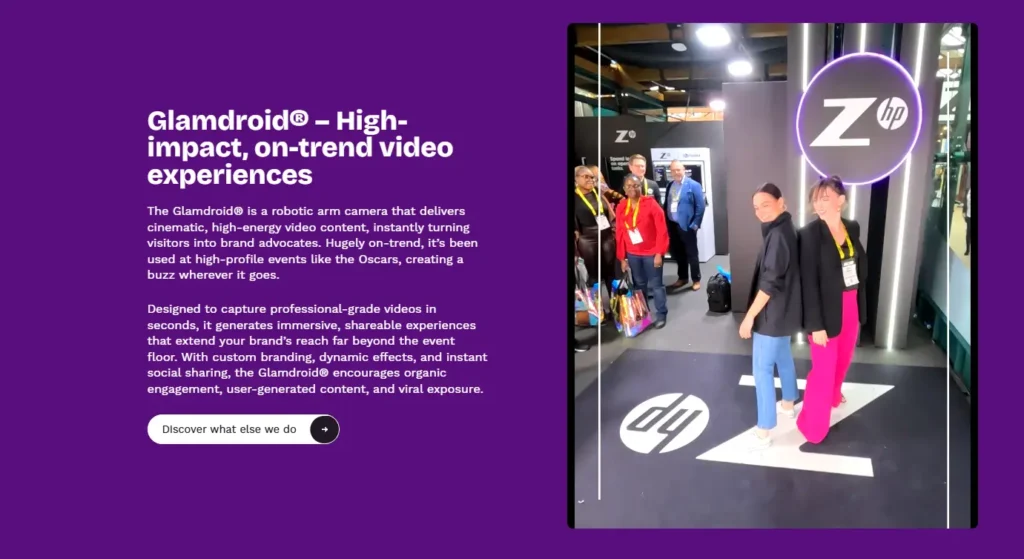
Take the Glamdroid® activation, for example – an on-stand video experience that lets attendees record high-quality, professional-style videos in seconds and share them instantly.
For Z by HP, this activation reinforced the brand as being innovative, future-ready, and customer-focused. And thanks to the shareable nature of the experience, it likely influenced how thousands of people outside of the event viewed the brand, too.
3. Encourages active participation & real-time consumer engagement
When people actively engage with your brand, everything changes. Suddenly, you’re not just part of the exhibition – you’re part of their experience.
That’s the power of experiential marketing: it transforms your audience from passive browsers into curious participants, ready to get involved, interact, and stay longer.
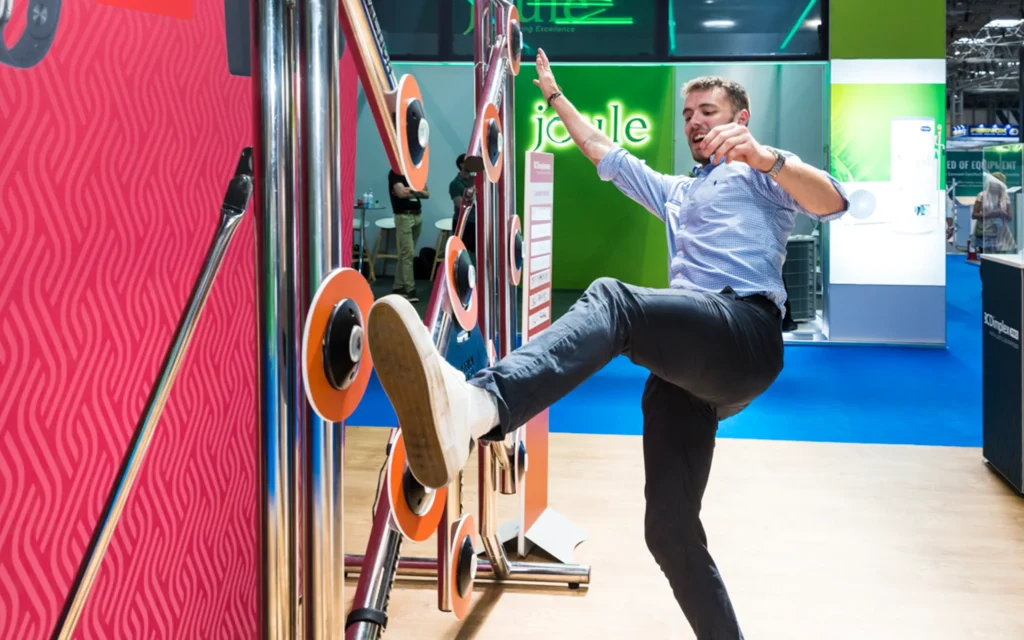
That’s exactly what we did with Dimplex. Across multiple events, we pushed their presence beyond the ordinary. We introduced a Batak challenge to get pulses racing and visitors interacting. We used feature lighting and 3D signage to make the brand impossible to miss. And with live product demos, we turned their tech into something people could see and experience first-hand.
This is what engaging consumers really looks like. High-energy. Hands-on. Unforgettable.
4. Creates full-on sensory immersion
When it comes to connection, the senses are everything. People don’t just absorb experiences with their eyes. They respond to what they touch, hear, smell, and feel.
That’s the magic of engaging multiple senses, or even just one. We saw this come to life at Crufts with Butternut Box – but with a twist. The sensory element wasn’t designed for the dog owners, it was built for the dogs themselves.
At the centre was the Bowl of Truth: a sniff test where dogs compared Butternut’s fresh ingredients to the mystery ingredients found in standard dog food. It was playful, totally on-brand, and perfectly aligned with their target audience – because dogs are everything to Butternut Box’s customers. Creating a sensory-rich experience that spoke directly to them (literally through their noses) was more than fun, it was spot-on brand engagement.

5. Drives buzz through word-of-mouth marketing
When you create something worth talking about, people share it naturally. They text a friend. Post a photo. Start a conversation.
Whether it’s a surprising twist, a bold creative concept, or an emotional brand story that sticks – great experiences get people talking. And when that buzz is coming from real people, not ads, it carries more weight.
This kind of peer-to-peer sharing isn’t a lucky side effect – it’s something you can design for. Think photo-worthy installations, shareable moments, branded challenges, unexpected interactions – all designed to spark emotion and get people talking for the right reasons.
6. Collects valuable consumer data
Every great experience is also an opportunity to conduct market research and gain valuable insights on your audience – in the moment, while the energy’s high and the interest is real.
Experiential marketing gives you a direct line to your potential customers. You can capture real-time feedback, see how people move through your space, track interactions, run on-the-spot surveys – and do it all in a way that feels natural, not intrusive.
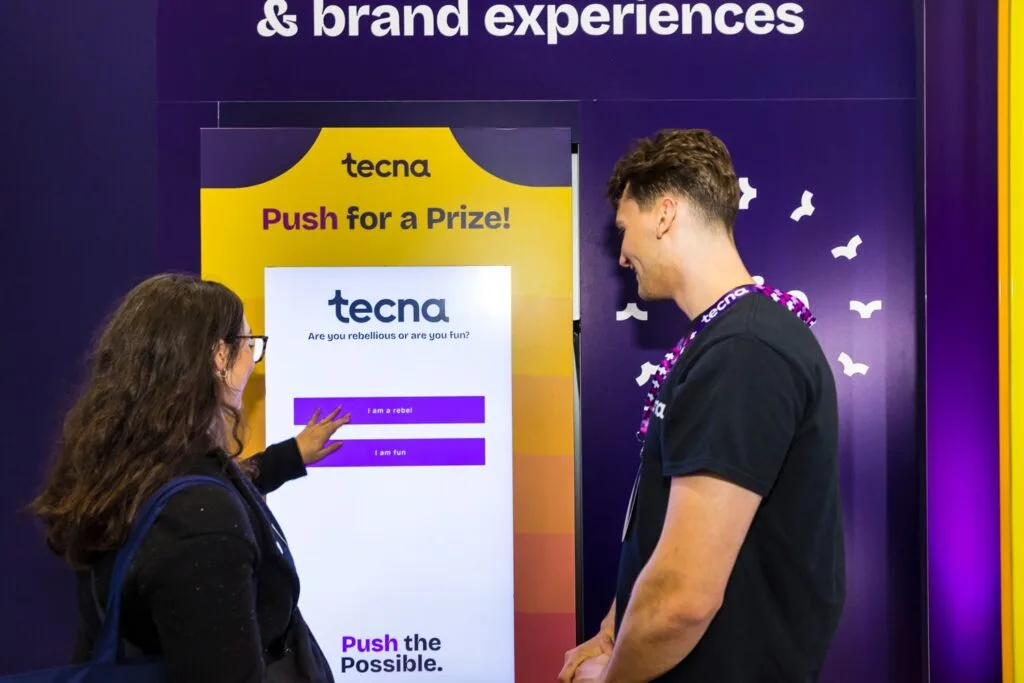
One activation we love for this is the Vending Machine experience – a gamified giveaway that does more than hand out merch.
With customisable questions built into the experience, visitors answer short prompts, and based on their responses, the machine dispenses tailored prizes. This not only encourages participation, but also captures valuable data about their interests, intent, and level of engagement. And because the rewards are branded, exclusive, or just plain fun, the experience sticks long after the event is over.
7. Builds stronger internal culture and brand advocacy
Experiential marketing doesn’t just excite your customers – it energises your team.
When your staff are involved in delivering bold, immersive experiences, they don’t just represent the brand – they live it. From sales teams on the stand to marketers behind the concept, these campaigns create moments of pride, alignment, and shared success.
It brings people together, sharpens purpose, and builds internal belief in the brand’s mission. And when your team believes in what you’re doing, that passion spreads straight to your audience.
8. Builds trust through face-to-face transparency
Live, in-person events allow people to see who you really are. They meet your team, hear your story, ask questions, and interact directly. It humanises your brand in a way no static campaign can – because there’s power in showing up face-to-face.
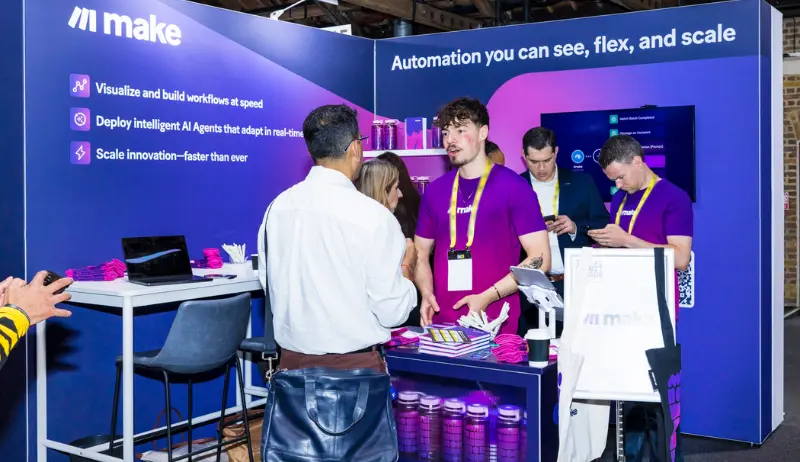
We brought this idea to life with Make, a brand that thrives on vibrant energy. For the London AI Summit, we helped them to create a stand that felt less like a showroom and more like an invitation.
High tables encouraged informal chats. Shelving and greenery added a sense of warmth and style. A custom reeded glass front counter brought texture and visibility to their colourful merchandise.
Every detail was designed to feel intentional, authentic, and unmistakably them.
9. Turns curiosity into confidence through first-hand experience
One of the most powerful benefits of experiential marketing is giving your audience the chance to explore, touch, test, and see your offering in action.
This isn’t just sampling, it’s removing friction from the decision-making process. And it’s not limited to product demos.
One of the best examples of this was Facebook IQ Live, a fully immersive experience designed to help businesses understand how to use Facebook (and Instagram) to drive real-world results. Rather than explain social ad strategy through slides, Facebook created interactive, physical spaces that mapped the customer journey.
In the IQ Mart, for example, guests walked through a simulated retail space that showed exactly how targeted Facebook and Instagram influence buying decisions. As they moved through the experience, they could see the path to purchase take shape.
The message was clear: this is how your audience behaves, and this is how your business can meet them where they are.
10. Captures high-intent leads for future conversion
Experiential marketing gives you a golden opportunity to collect leads that actually mean something. You’re not guessing who’s interested, you’re seeing it in real time.
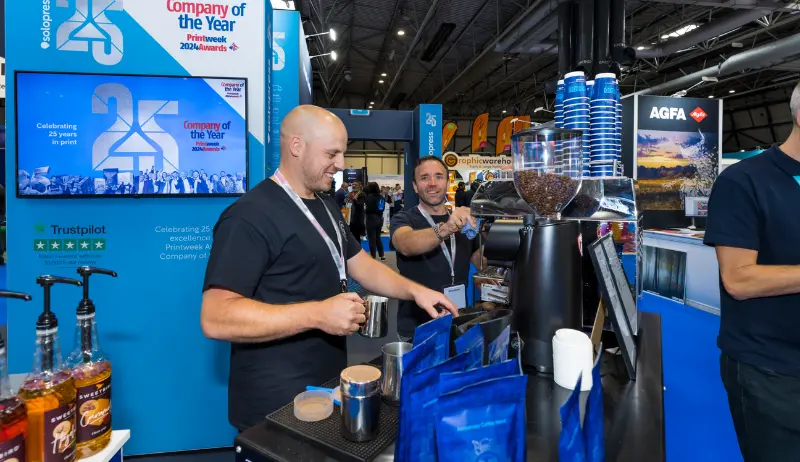
That’s why, when we partnered with Solopress for The Print Show, we didn’t just think about layout – we thought about flow, comfort, and conversation. Placing seating spaces next to a barista coffee station wasn’t just a hospitality touch, it was a strategic move. It encouraged longer visits, deeper dialogue, and genuine connections between Solopress and their customers.
11. Enhances brand differentiation
In a world full of lookalike ads and templated campaigns, it’s easy to blend in. Experiential marketing flips that. It gives you the space to show the world what makes your brand truly unique, not just in what you sell, but in how you show up.
A standout example is Refinery29’s 29Rooms, a multi-sensory exhibition made up of 29 immersive rooms, each co-created with artists, musicians, and brands. Every room offers an unexpected interactive element. Guests might find themselves at a phone-free dance party, or walking into a room filled with hundreds of phones suspended from the ceiling – each one sharing an inspirational story when held to your ear.
It’s fresh. It’s emotional. And most importantly, it’s memorable.
12. Builds long-term customer loyalty
When people connect with your brand on a deeper, more personal level, you don’t just leave an impression – you increase brand loyalty.
What does that look like? A premium skincare brand might create a live demo space at a wellness expo, complete with personal consultations, ambient lighting, and product trials. Visitors don’t just leave with a sample, they leave feeling seen, educated, and aligned with the brand’s self-care ethos. Months later, when it’s time to restock, they’re not Googling options. They’re heading straight for the brand they connected with.
13. Creates social content gold for your brand channels
One of the biggest wins of experiential marketing is the ready-made content it delivers.
Every interaction, demo, conversation, and design moment is a chance to capture something worth sharing. From short-form videos and behind-the-scenes clips to brand storytelling, product walk-throughs, and authentic reactions, you leave with a bank of quality content to power your socials, email, and future campaigns.
And when the experience is designed with shareability in mind, your audience joins in. Think user-generated content and branded hashtags – content that amplifies your reach and shows your brand through their eyes.
14. Creates an emotional connection
Your experiential marketing efforts give you a powerful platform to bring your brand values to life in a way people can feel. Whether it’s sustainability, innovation, inclusivity, or something else entirely, a live experience lets you express those values through action, design, and interaction – not just messaging.
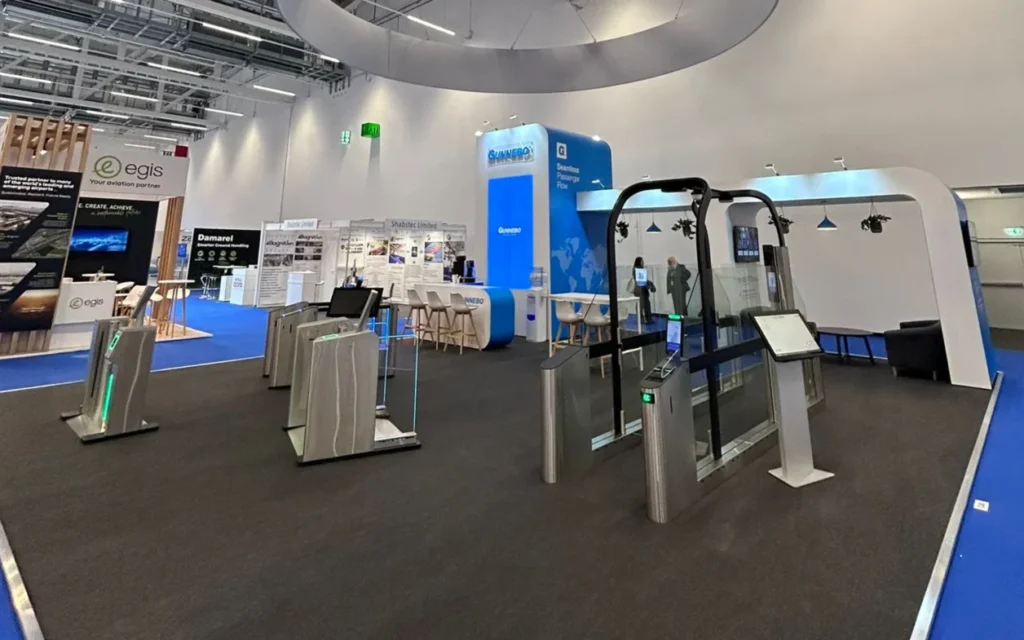
We saw this in action with Gunnebo. As a global leader in security, they didn’t just want to showcase their latest products, they wanted to demonstrate their commitment to sustainability. So we worked together to build a stand that reflected those values, using modular structures, recycled materials, and energy-efficient lighting, supported by a detailed carbon report that told the story behind every design choice.
The result? A stand that sparked continued post-show interest in both Gunnebo’s offering and their approach to responsible exhibiting.
15. Accelerates sales by shortening the buyer journey
Experiential marketing doesn’t just introduce your brand, it invites your audience to interact, ask, experience, and decide on the spot. You’re not nurturing leads through endless emails or ad retargeting. You’re meeting them at the intersection of interest and intent – and giving them a reason to act.
According to EventTrack, 74% of consumers say engaging with branded event marketing experiences makes them more likely to buy the products being promoted. That’s not just brand awareness. That’s real, measurable momentum down the funnel.
So, how can you get started with experiential marketing?
Pop-up shops. Interactive exhibition stands. Immersive events. If it gets people involved, it’s experiential – and the options are wide open.
Need a breakdown of what’s out there? We’ve got you covered. Dive into our blog on the types of experiential marketing.
Experiential marketing with meaning – powered by Team Tecna
We’re Tecna – your creative partner in all things experiential. Using our smart, modular systems, we help you create bold, brand-aligned spaces that can flex, evolve, and scale as you do.
Need to move fast? No problem. We’ve got nationwide reach, in-house build crews, and the creative firepower to bring your ideas to life with clarity, confidence, and big energy.
Every project is a true collaboration – built on your vision, powered by our systems, and delivered with expert care.
Activate Your Brand with Tecna
Frequently asked questions
Got questions? We’ve tackled the big ones below.
-
What is the value of experiential marketing?
The real value of experiential marketing lies in its immersive and interactive nature. It transforms traditional campaigns into memorable, in-the-moment experiences that feel like your brand.
Through hands-on experiential marketing strategies, you don’t just push a message, you create a moment. A great experiential marketing offer turns your audience into participants and your values into something people can see, touch, and talk about.
From design that brings your brand personality to life, to unexpected activations that spark conversations on social media and increase brand awareness, the impact of successful experiential marketing campaigns is long-lasting.
-
How effective is experiential marketing?
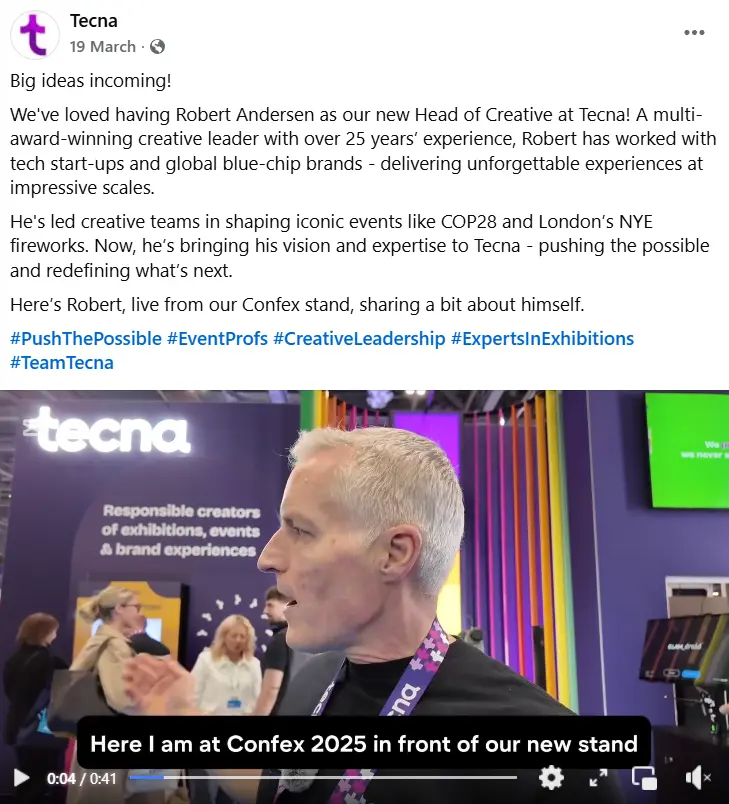
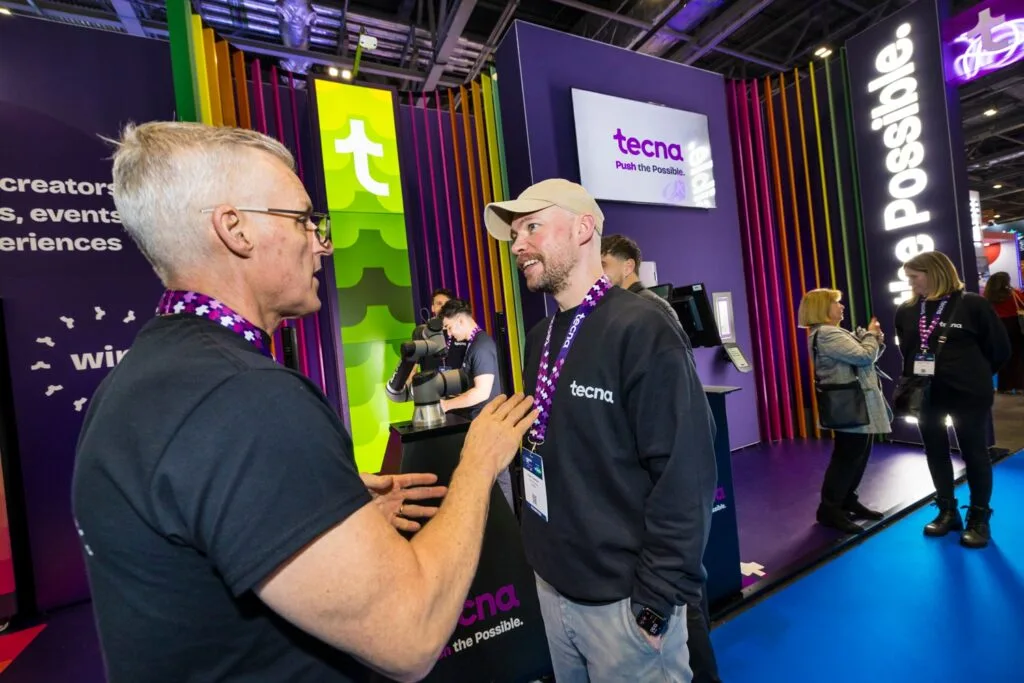
Experiential marketing is incredibly effective when it’s done with purpose and creativity. When we launched our rebrand at Confex 2025, we used experiential tactics to connect with our audience in the moment and ended up generating over 600 qualified leads. That’s the kind of real-world engagement that speaks for itself.