Exhibition stand technology has moved faster in the past five years than in the previous twenty. The range of available tools – from touchscreen product explorers through to AI-powered personalisation and real-time engagement tracking – is wider than most marketing managers realise. The challenge is not a shortage of options; it is knowing which technologies genuinely move commercial outcomes and which are impressive demonstrations of budget.
The Principle Before the Products
Technology on a stand should do one of three things: attract visitors who would otherwise walk past, deepen engagement with visitors who have already stopped, or capture data that makes post-show follow-up more effective. If a piece of technology does none of these things, it is a feature rather than a tool. The most expensive LED wall on the show floor will not generate a single qualified lead on its own. The right technology, integrated into a coherent stand experience, will multiply the performance of everything around it.
Technologies That Genuinely Drive Engagement
Large-format LED and high-resolution displays
High-quality screen technology remains the most universally effective visual draw on an exhibition floor. Not because screens are novel, but because they offer motion, brightness, and dynamic content in a static environment. The key variable is content quality: a well-designed motion graphic on a large LED panel is a significant footfall driver. A static PowerPoint presentation on a large screen is not. The investment in quality screen content – not just quality hardware – determines the return.
Touchscreen product explorers and configurators
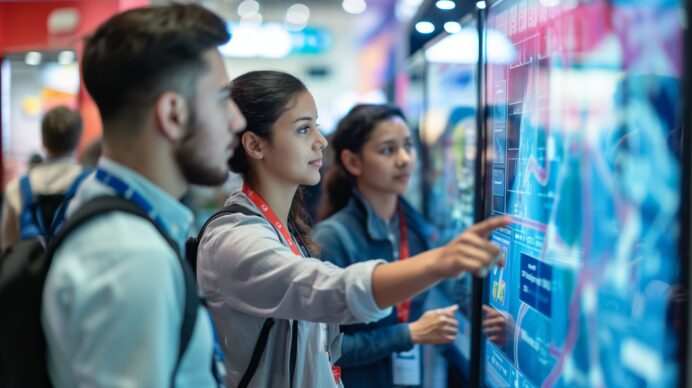
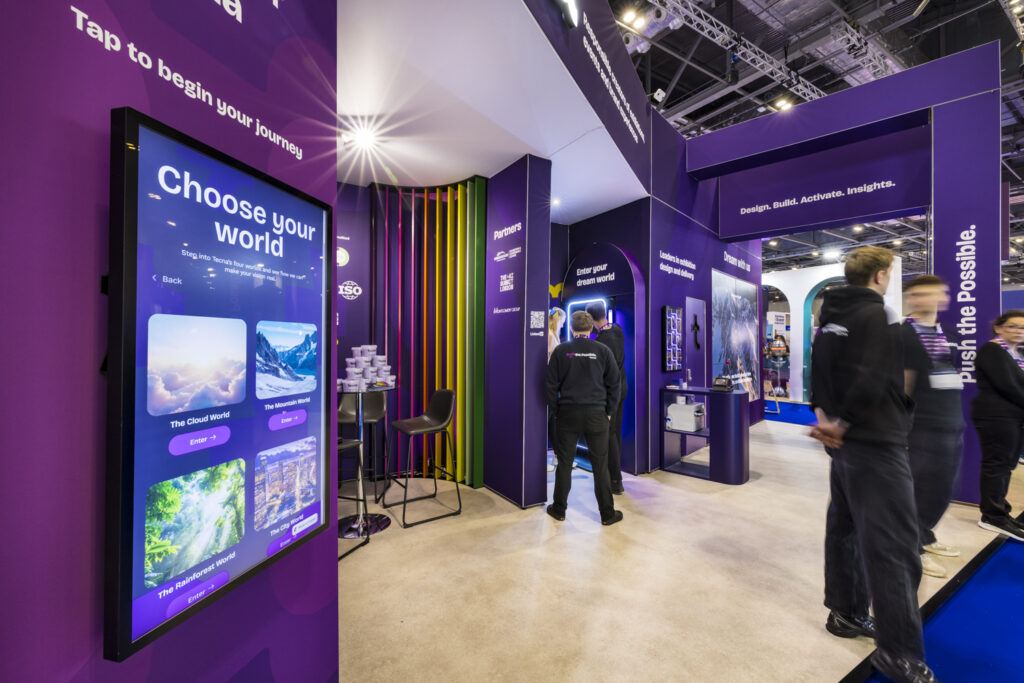
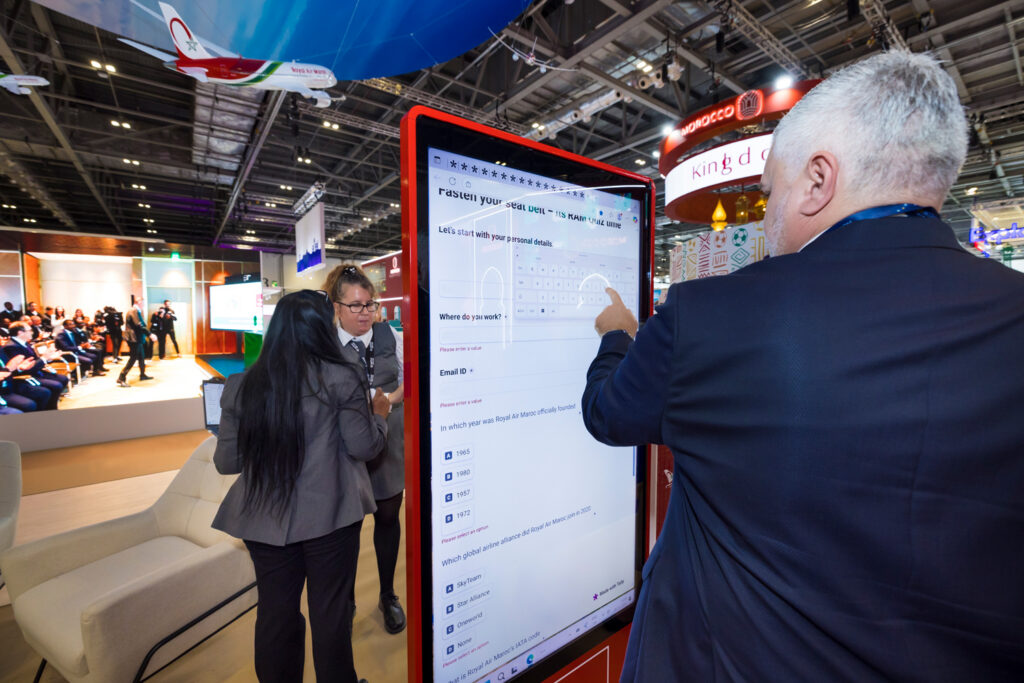
Interactive screens that allow visitors to explore a product range, build a custom solution, or navigate a complex service offering create dwell time that passive presentations cannot. The visitor is in control of the experience, which increases engagement and creates a natural conversation hook for stand staff. These work especially well for businesses with complex or modular product ranges where the full breadth cannot be communicated in a brief conversation.
AI-powered personalisation and photo experiences
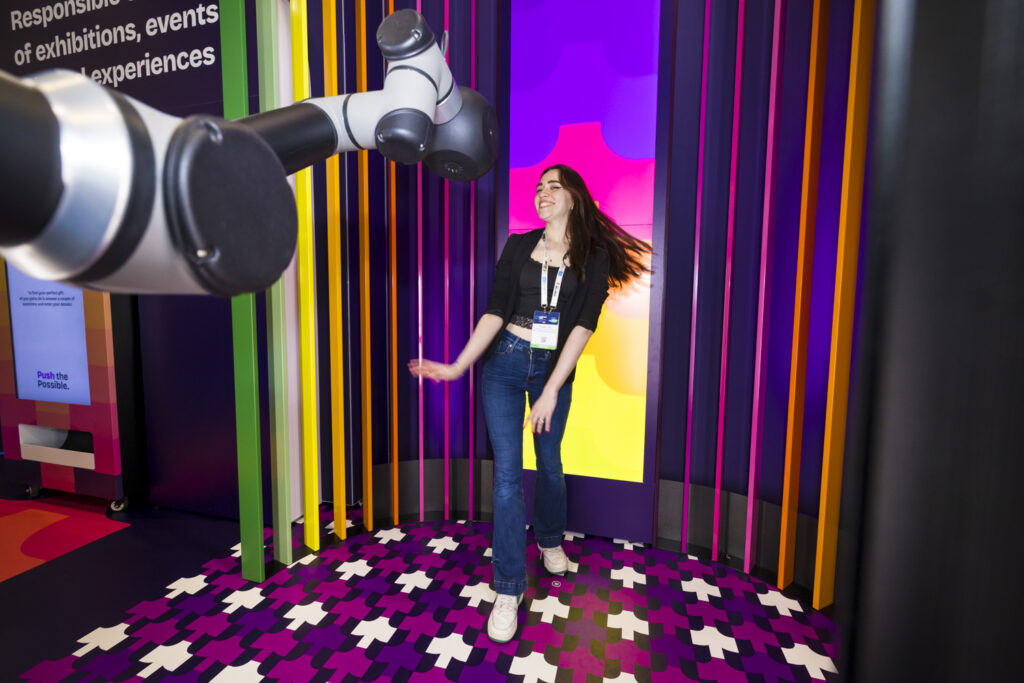
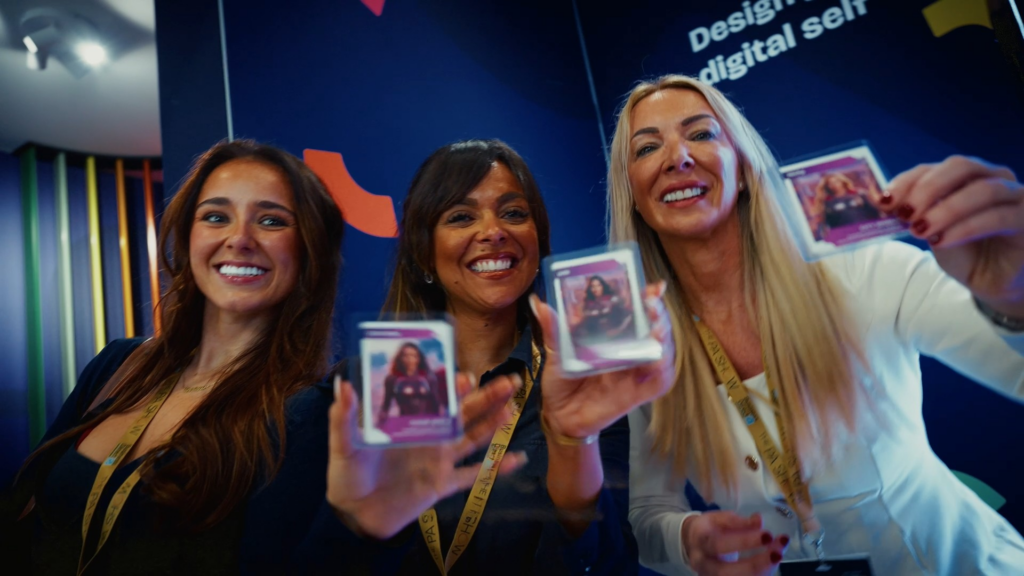
AI-driven activations – where visitors interact with a system that generates something personalised to them, whether a customised image, a tailored recommendation, or a generated analysis of their specific situation – create a genuinely memorable experience and produce shareable output. These activations are particularly effective at shows where a younger or more digitally-native audience is present. They also generate natural social sharing, which extends the stand’s reach beyond the physical event.
Augmented and mixed reality
AR and MR are moving from novelty to genuine commercial tool. For businesses in construction, manufacturing, architecture, or any field where showing a physical product in context is valuable, augmented reality allows visitors to see how a product performs in their own environment using a headset or tablet. The barrier to implementation has dropped significantly, and for the right application, the engagement and memorability impact is high.
Live engagement and gamification platforms
Real-time leaderboards, digital competitions, interactive quizzes relevant to the industry, and live polling that generates crowd-sourced data all create sustained engagement across the day of a show. They give people a reason to return to the stand, generate energy and social proof through visible participation, and – when well-designed – create conversations between strangers that centre on your brand.
Lead capture and qualification tools
Smart lead capture – beyond badge scanning to include qualification questions, interest scoring, and immediate CRM integration – has a direct commercial impact on post-show conversion. Systems that allow stand staff to record a brief voice note or structured qualification response alongside a contact capture produce dramatically better follow-up quality than a spreadsheet of names and email addresses. This technology is invisible to visitors but consequential for commercial outcomes.
Technology That Rarely Justifies Its Cost
Virtual reality, despite sustained excitement about its potential, has a poor track record as an exhibition engagement tool. Headset hygiene concerns, the time required to deliver a full experience, and the exclusivity of the technology, also, only one or two people can experience VR at a time. These factors make it a poor commercial investment for most stands. There are specific applications where it genuinely works, but as a general engagement mechanic it creates a queue, not a conversation.
Similarly, large technology installations that have no clear relationship to what the exhibiting company actually does are hard to justify commercially. Technology that demonstrates capability is valuable. Technology that demonstrates budget is not.
Sustainability and Technology
At Tecna, we increasingly integrate technology choices with sustainability considerations. Digital visitor guides replace printed brochures. Reusable modular technology structures replace one-show custom builds. Real-time energy monitoring helps clients understand and report on their event carbon footprint. These are not just ethical choices; they are increasingly important to the procurement teams and sustainability-minded buyers that many of our clients are trying to reach.
If you are thinking about what technology to include in your next stand, we are happy to work through the options against your specific objectives and budget. The answer is almost always simpler and more targeted than the full menu of available options suggests.