Introducing: The Show That No Longer Made Sense (or how to choose a trade show)
A few years ago, a client came to us to build their stand for a trade show they’d attended every year for almost a decade. The build quality was good. The stand was well-designed. The brief was clear.
About three weeks into the project, we asked a question we ask at the start of every build: “What does winning look like for you at this show?”
The answer, after a long pause, was something along the lines of: “We’ve always done it.”
Not “this is where our buyers are.” Not “we get twenty qualified conversations per day.” Just: inertia.
We finished the build. But we also had a longer conversation, about what they were actually getting from the exhibition, and whether the same budget could work harder somewhere else.
That conversation happens more often than it should. The exhibition calendar is one of the most unexamined line items in most marketing budgets. Shows get booked because they were booked last year, because a competitor is going, or because the industry seems to expect your presence.
None of those are reasons to spend £30,000, £80,000, or £150,000.
Here is the framework we now share with every client who asks us to help them think about how to choose a trade show and their exhibition programme, not just their exhibition stand:
Start With the Objective, Not the Show List
Before evaluating any individual show, you need a clear answer to one question: what is this exhibition investment supposed to produce?
The answer should be specific enough to be measured after the event. Not “brand awareness” or “meet customers” what specific outcomes, in what volume, from what kinds of people?
Common legitimate objectives when it comes to how to choose a trade show include:
• A set number of qualified leads per day with a defined ICP or decision-maker profile
• Launching a new product to a defined audience within a specific sector
• Penetrating a new geographic market
• Strengthening existing client relationships at a senior level
• Winning a set number of RFP invitations within 90 days of a show

Once the objective is clear, every show evaluation becomes a matching exercise: does this event put us in front of the right people, in sufficient numbers, with a realistic opportunity to achieve that outcome?
The Five Questions That Should Drive Every Show Decision
1. Who actually attends — and do they match your buyer profile?
Show organisers publish attendance data. Read it critically.
Total attendance numbers are almost always the headline figure and almost always the least useful one. What matters is the breakdown: which sectors, which job functions, which geographies, which company sizes.
Ask the organiser for the last three years of attendee data if you can get it. Look for trends. A show that was 60% procurement decision-makers in 2022 and is now 45% marketing managers and 30% students may have drifted away from your audience.
Also ask: who exhibits? A show floor dominated by your direct competitors has very different strategic implications to one where you would be one of a small number of players in your category.
2. What is the realistic cost; total, not headline?

When it comes to how to choose a trade show, the stand space fee is the starting point, not the budget. Many brands are consistently surprised by the full cost of a show because they plan around the space cost and add everything else as the project develops.
A more accurate exhibition cost model includes:
• Stand space fee
• Stand design and build (including storage and dismantling)
• Graphics and any bespoke printed material
• AV, screens and technology
• Staffing costs including travel, accommodation and subsistence
• Shipping and logistics
• Post-show storage if the stand is being reused
• Any activation or experiential elements
For major UK shows at large scale venues like NEC Birmingham, ExCeL London, or Manchester Central, fully costed attendance at the largest stands frequently runs into six figures. Even well-planned mid-size stands at national shows typically land between £15,000 and £50,000 all-in.
The honest question to ask before committing is: what is the minimum return this show needs to generate to justify this investment, and is that realistically achievable?
3. How does this show fit into your annual exhibition calendar?
No show exists in isolation. The question is not just whether this event is worth attending, it’s whether it’s worth attending at this stage of your buyers’ decision cycle and your own commercial calendar.
Shows that fall after your industry’s primary buying season are structurally less likely to convert than shows that land when buyers are actively scoping options. A product launch that happens in October will land very differently at a February show than at a show in November.
Map your exhibition calendar against your commercial cycle. The shows that fall at the right moment in your buyers’ purchasing journey are worth disproportionately more than those that don’t, even if the footfall numbers look similar.
4. What would your presence actually signal?
Showing up at a show sends a message that goes beyond the stand. Being present at Farnborough Air Show signals global aerospace credibility. Being present at a major healthcare IT event signals sector commitment to the NHS and private health buyers. Not being at a show where every significant competitor is present can signal instability or retreat.
Consider the reputational dimension of the decision, not just the lead generation one. Some shows are worth attending primarily because absence is noticed. Others are worth not attending because presence associates you with a category you’re trying to move away from.
5. Do you have the internal resource to follow this up properly?
The most underweighted factor in trade show selection is what happens after the show ends.
A show that generates 200 conversations and has no follow-up resource to process them is worth less than a show that generates 50 conversations with a committed, resourced follow-up programme.
Before committing to any show, confirm: who owns the follow-up? What is the response time commitment for a hot lead? What CRM process captures and tracks show leads through the pipeline?
If the honest answer is “we’ll figure it out,” reconsider the show. The value of an exhibition lead decays very quickly, most research suggests that the majority of show leads become cold within two weeks if not contacted. The show is only as good as the process behind it.
How to Evaluate a New Show You’ve Never Attended
For shows you’re considering for the first time, the fastest route to a useful evaluation is to attend as a visitor before you commit as an exhibitor.
Walk the floor. Count stands in your category. Watch where visitors cluster and where they don’t. Talk to exhibitors informally, most are surprisingly candid about whether the show delivers for them. Buy a coffee and spend an hour watching the flow of the show at peak time and an hour at quiet time.
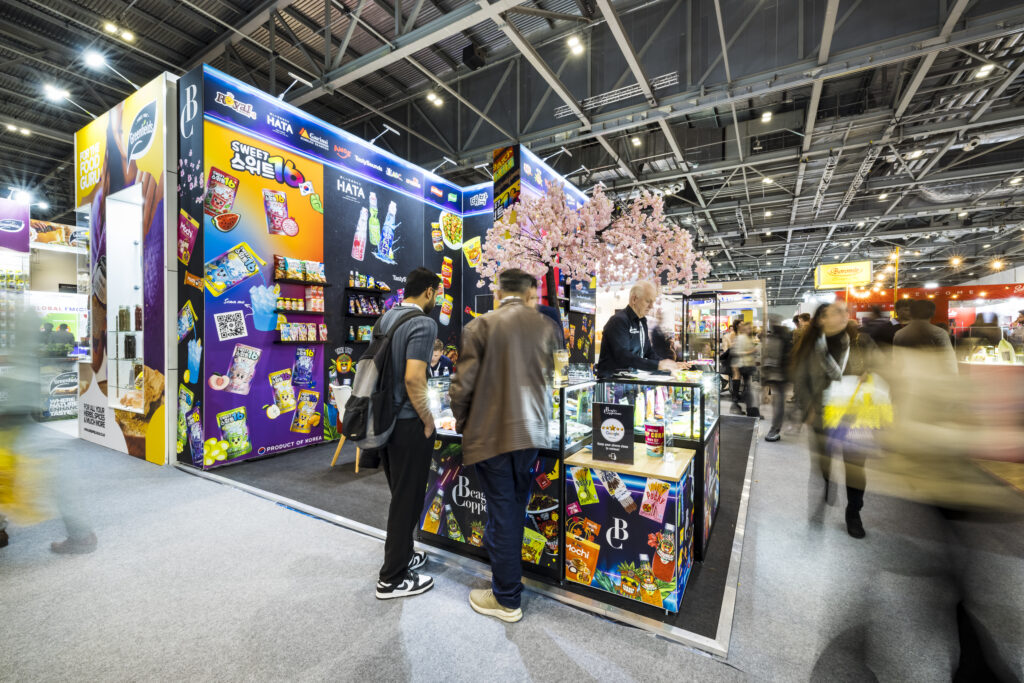
The difference between a show that works and one that doesn’t is often visible on the floor in a way that no organiser data captures. An experienced observer can read the energy of a show within thirty minutes of arriving.
If visiting as a delegate isn’t practical, ask the organiser for references from existing exhibitors in your sector. Then actually call them.
The Shows Worth Knowing About by Category
While every brand’s optimal show list is specific to their sector and objectives, certain shows command consistent attention across industries:
Advanced manufacturing and aerospace: Farnborough International Airshow, Advanced Engineering, Southern Manufacturing
Technology and AI: AI Summit London, IP Expo, Cloud Expo Europe
Travel and hospitality: International Luxury Travel Market, World Travel Market
Healthcare: The Health & Care Innovation Expo, RCM, HETT, Digital Health Rewired
Retail and consumer: Retail Technology Show
Professional services and HR: CIPD Annual Conference, Business Show
Each of these has a distinct attendee profile and buyer demographic. The right list for your brand depends entirely on who you’re trying to reach and what you’re trying to achieve when you get there.
When to Walk Away From a Show You’ve Always Done
The hardest exhibition planning conversation is the one about shows that have become habitual.
The test we recommend on how to choose a trade show is straightforward: if you were evaluating this show from scratch today (with no history, no existing stand, no relationship with the organiser) would you commit to it at the current investment level?
If the honest answer is no, you have a valuable decision to make. The budget, the team time, and the creative energy could be allocated to a different show or to a different kind of marketing investment entirely.
Stopping a show that isn’t performing is not a negative. The brands that do it deliberately, tend to perform much better at the shows they do commit to, because the investment is concentrated into the right places rather than spread across a calendar that no one has truly audited in years.

Want to review your exhibition programme and make sure every show is earning its place? Talk to our expert team.
Team Tecna designs and builds exhibition stands for global brands at shows across the UK and internationally, with in-house manufacturing at our Farnborough facility. Our projects team supports clients with exhibition strategy, show selection, and post-event performance analysis.