77% of marketers say events are their most effective channel.
85% of consumers are more likely to buy after attending a branded experience.
That’s the kind of impact you can build a campaign around.
At Tecna, we’ve built our name helping brands do more than turn heads with experiential marketing. We take your boldest ideas and bring them to life through smart, sustainable, creatively charged experiences that move people and deliver real results.
The experiential marketing statistics you’re about to see aren’t just impressive, they’re your why. So if you’re ready to supercharge your next campaign with real results, start here.
Market growth & investment trends in experiential marketing
Leading brands are placing bigger bets on experiential campaigns – and it’s paying off. The stats below reveal how marketing investment is shifting towards creating immersive, experience-led campaigns that speak louder and land stronger.
1. 77% of marketers use experiential marketing, showing its established role in the modern marketing mix (HubSpot).
2. 80% of companies have increased experiential marketing spend, with budgets now representing between 10–30% of total marketing allocations (Marketing Dive).
3. Event marketing takes up an average 14% of the total marketing budget, showing the increasing prioritisation of in-person and hybrid experiences (AMEX GBT).
4. 43% of companies aim to build brand loyalty through experiential marketing (AnyRoad 2024 Report).
Effectiveness and ROI of experiential marketing
These stats show how experiential marketing campaigns outperform traditional channels in both engagement and return, making the case for smarter, more strategic investment in live and immersive formats.
5. 77% of marketers say live experiences are the most effective marketing channel for their company (Splash).
6. 83% of marketers say events are critical for their business growth (Splash).
7. Event ROI typically ranges between 25% and 34%, according to a survey of over 200 marketing professionals – 68% of whom focus on B2B (Marketing Charts).
8. 59% of marketers believe experiential marketing outperforms traditional advertising in ROI (Gitnux).
9. After launching an experiential event, an entrepreneur saw Instagram engagement rise 30% and newsletter signups nearly quadruple within just one month (Forbes).
Brand engagement as a result of experiential marketing
Modern audiences expect more than traditional marketing. They want meaningful, memorable experiences. That’s exactly what experiential marketing offers: real-world engagement that drives behaviour change and builds emotional connection.
10. 85% of consumers are more likely to make a purchase after attending a branded event (Forbes).
11. 91% leave events with a more positive perception of the brand (Forbes).
12. 65% of consumers say live events help them understand products better (HubSpot).
13. 79% of event attendees say they’d pay more for events that feel meaningful or transformative. (Eventbrite).
14. With 92% of consumers preferring in-person events to virtual (within an hour’s travel), the opportunity for bold, localised experiential marketing events has never been clearer (Eventbrite).
15. 80% of customers say the brand experience matters just as much as the product or service itself, highlighting why experience-led strategies are now business critical (Salesforce).
Want to see how it all comes together? Read our blog on real-world experiential marketing examples and get inspired by what’s possible.
Experiential marketing brand perception and loyalty statistics
True loyalty is earned not through exposure, but through experience. These insights show how experiential marketing events create meaningful connections, turn audiences into advocates, and drive value far beyond the campaign.
16. Live marketing events help 68% of consumers form stronger emotional connections with brands (Gitnux).
17. According to Harvard Business Review, emotionally connected customers are more than twice as valuable as merely satisfied customers (HBR).
18. 84% of marketers say events give them a competitive edge, helping their brands stand out in saturated markets (Splash).

Integration with digital or social content
Experiences aren’t confined to physical locations, they ripple across social platforms. These stats show how experiential marketing strategies spark shareable content, extend reach, and feed your digital ecosystem with audience-led storytelling.
19. 83% of consumers will share an event on social if they found it engaging (Gitnux).
20. 98% of consumers create digital content at live events (EventTrack).
21. 68% of Gen Z are open to paying more for events endorsed by influencers (Eventbrite). Smart brands are weaving influencer strategy into their experiential marketing to boost relevance.
Use of technology for experiential marketing
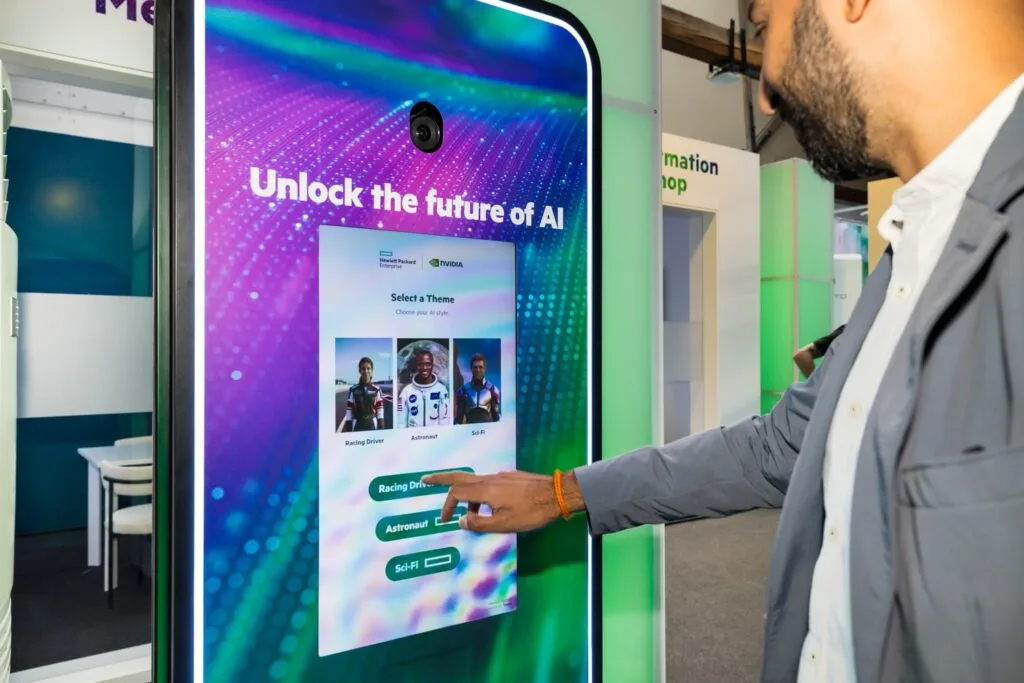
These figures show how immersive tech like Virtual Reality and Augmented Reality not only delight attendees, but dramatically boost brand recall and engagement.
22. VR campaigns deliver 27% more emotional engagement and 34% better recall than 2D media, according to neuroscience testing (Point in Time Studios).
23. 72% of UK adults find AR fun and engaging, with studies showing AR improves memory encoding by 70% (Zenith Media).
24. 76% of attendees say they’d pay more to attend a tech-enhanced event (Eventbrite).
25. 60% of millennials are willing to pay more to retailers offering immersive virtual tools like AR fitting rooms or product staging, reinforcing the value of experiential tech (TCS).
Sustainability and experiential marketing
Purpose-driven events resonate. These stats show that today’s audiences want brands to lead with sustainability – and reward those that do with greater loyalty and participation.
26. Sustainability in event briefs is rising: Just 14% of planners included sustainability in RFPs in 2019, versus 31% in 2024 (PCMA).
27. 80% of consumers are willing to pay extra for sustainability (PWC). That’s a powerful signal that values-led experiences are commercially strategic.
28. This seems to be particularly true of Gen Z audiences, with 84% having recently paid more for sustainable products (TCS). For this values-driven generation, sustainability isn’t a bonus, it’s a baseline. Brands that design experiential events with eco-consciousness in mind stand to make an impact on them.
29. 59% of attendees say environmental and social impact influences their decision to attend, making inclusive, eco-conscious events more attractive (AllTopStartups).
30. 67% of attendees feel that organisers are genuinely committed to sustainability when responsible waste and resource management practices are visible (Eventbrite). When you integrate sustainability into the fabric of your experiential marketing strategy, from low-waste builds to smart resource planning, your audience notices.
What do the numbers tell us about experiential marketing?
These stats confirm what ambitious brands already know: experiences fuel growth. They inspire deeper emotional bonds. They deliver stronger ROI. And they shape perceptions in ways no other channel can. When audiences feel something, they remember.
Bold ideas. Smarter outcomes. That’s brand activation with Tecna.
At Tecna, we live and breathe this movement. From first sketch to final data report, our brand activation services are rooted in collaboration, creativity and real-world performance.
• Creative partnership – We work alongside you to turn ambitious ideas into audience-ready realities. Our design-first approach brings your brand to life in new and unforgettable ways.
• Built-in sustainability – We use reusable, modular systems and eco-conscious materials that reduce waste and carbon without compromising visual impact.
• Performance insight – We back every campaign with post-experience analytics so you can see what worked – and build on it.
We don’t settle for ordinary. We push the possible – and we do it with clients who want more from their marketing.
Let’s create something unforgettable together.
Frequently asked questions
We’ve explored over 30 powerful stats throughout this page, but here’s a recap in context. These FAQs highlight why experiential marketing is on the rise, how it delivers real ROI, and what trends are reshaping the space.
-
What is the forecast for experiential marketing?
Experiential marketing is rapidly growing, with 80% of companies increasing their spend.
Why? Because the marketing landscape is shifting. More brands are recognising that experiential events do more than create buzz – they build deep connections and spark long-term loyalty. If you’re not participating in experiential marketing yet, now is the time to lean in.
-
Do experiential marketing campaigns really deliver ROI?
Yes, experiential marketing campaigns consistently drive high ROI, outperforming traditional methods across the board. Most events deliver between 25% and 34% return on investment, and that’s just the start.
Beyond the metrics, a well-executed experiential marketing experience delivers advocacy, lifetime value, and rich digital amplification. With the right strategy and creative execution, you’re building brand equity that lasts.
-
What are the top experiential marketing trends?
The biggest experiential marketing trends centre around tech and sustainable design. These include:
- AI, AR and VR integration for smarter, more immersive campaigns. VR alone boosts emotional engagement by 27%.
- Sustainable activations that align with audience values, especially for Gen Z and millennials.
These emerging trends are pushing the boundaries of experiential marketing, combining innovation with purpose to deliver smarter, more sustainable experiences that connect on every level.
-
Are experiential events more effective than traditional advertising methods?
Yes, experiential events drive more memorable experiences than traditional ads. In fact, 85% of attendees are more likely to make a purchase after an event.
They also power real-time amplification. 98% of event attendees create digital or social content, and with the rise of hybrid events, these experiences are more accessible than ever.