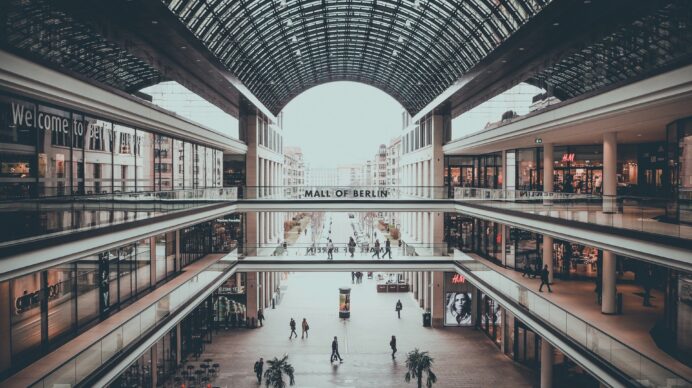
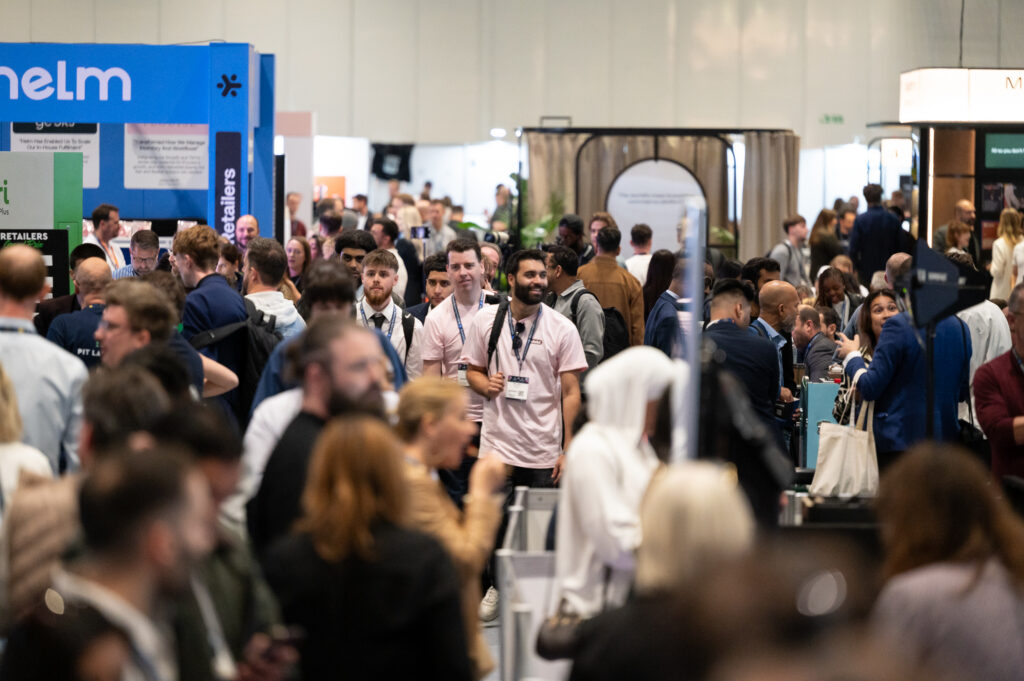
Every stand at a trade show is competing for the same finite resource: a visitor’s attention in motion. The average show attendee walks several kilometres over a full day on an exhibition floor.
They develop a remarkably efficient filtering system very early in the day, scanning for reasons to stop and dismissing most of what they see within two seconds. Understanding what breaks through that filter – and what does not – is the foundation of effective stand design.
What the Research and Experience Tell Us
After more than two thousand stand builds and years of watching how visitors behave on show floors, the pattern is clear. People engage with stands that trigger recognition – of a problem they have, a question they are carrying, or an opportunity they have been thinking about. The stop decision is almost always emotional before it is rational, and it happens in a matter of seconds.
A stand that leads with a company name and logo as its primary visual element is asking visitors to already know and care about the brand before the stand does any work. That is a very small audience.
A stand that leads with a problem, a provocation, or a specific claim that is immediately relevant to the visitor’s world is doing the filtering work for them – and inviting the right people in.
The Primary Visual Focal Point
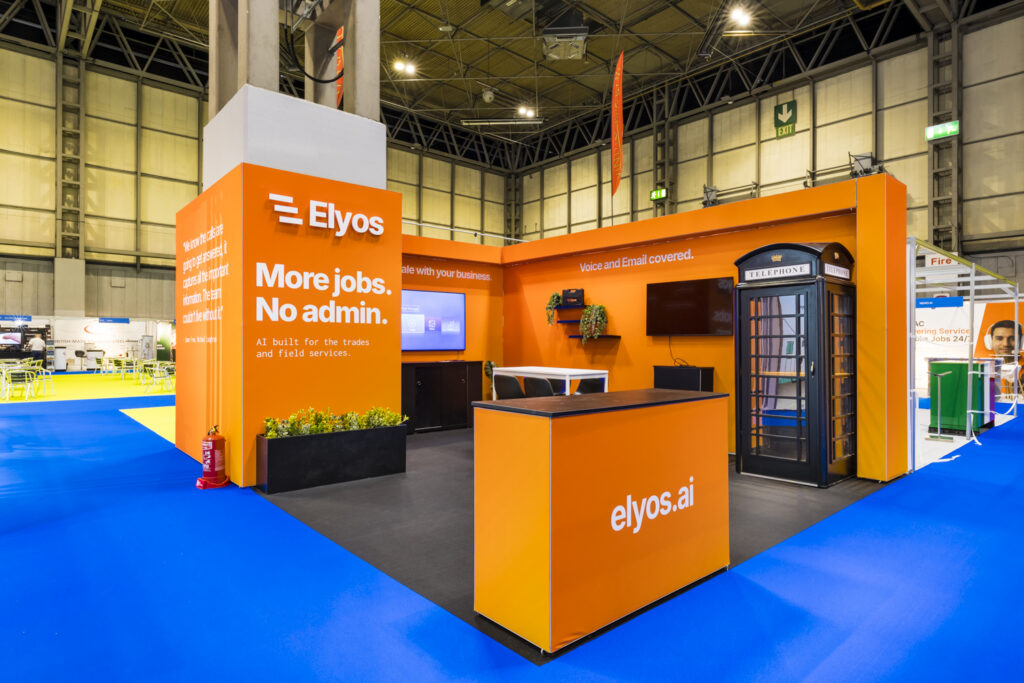
The single most important design element on any stand is the dominant visual that a visitor sees from five to fifteen metres away, before they have consciously decided to look. This element has one job: to create a moment of recognition in the target audience. It should not try to explain what the company does.
The best focal points we have seen and built are a single, large, high-contrast visual paired with a short piece of copy that speaks to a specific pain or ambition. Not ‘the leading provider of workplace management solutions’ but ‘most workplace managers know exactly what is going wrong and exactly why nobody is fixing it.’ One is a positioning statement. The other is an invitation to a conversation.
Motion and Contrast
The human eye is evolutionarily designed to detect motion. In a static exhibition hall, anything that moves stands out disproportionately. LED walls, rotating elements, animated graphics, live product demonstrations, and even the deliberate movement of stand staff can all function as visual anchors that pull attention.
Motion does not need to be dramatic – even subtle animation on a screen is more attention-grabbing than a static graphic of the same size.
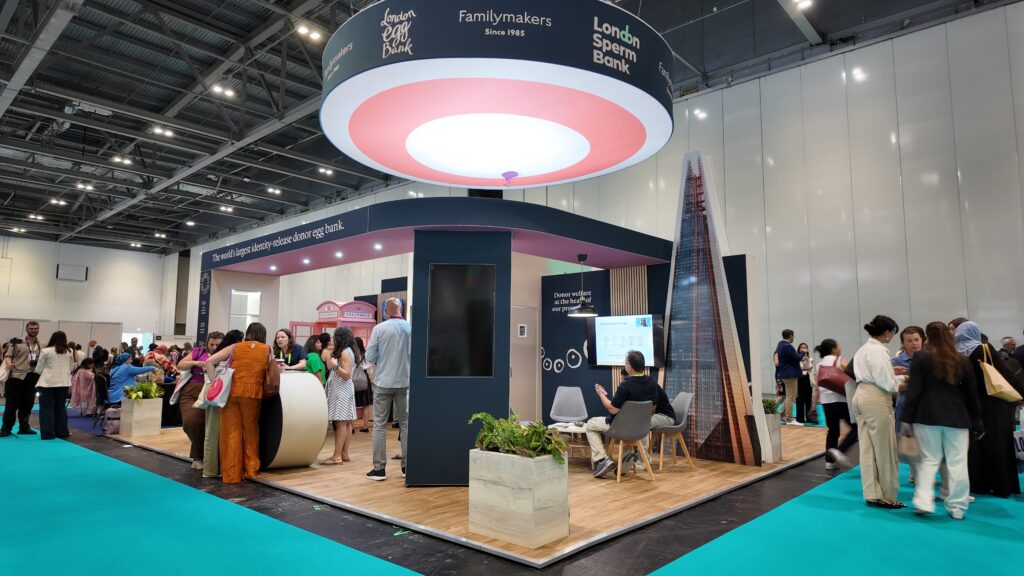
Contrast works on a similar principle. A stand that is strikingly different in colour, texture, or material from its neighbours will attract attention simply by being visually distinct. This does not mean garish or attention-seeking for its own sake. It means making considered design choices about your stand in the context of the floor around you – knowing what your neighbours tend to do and doing something deliberately different.
Sound and Scent
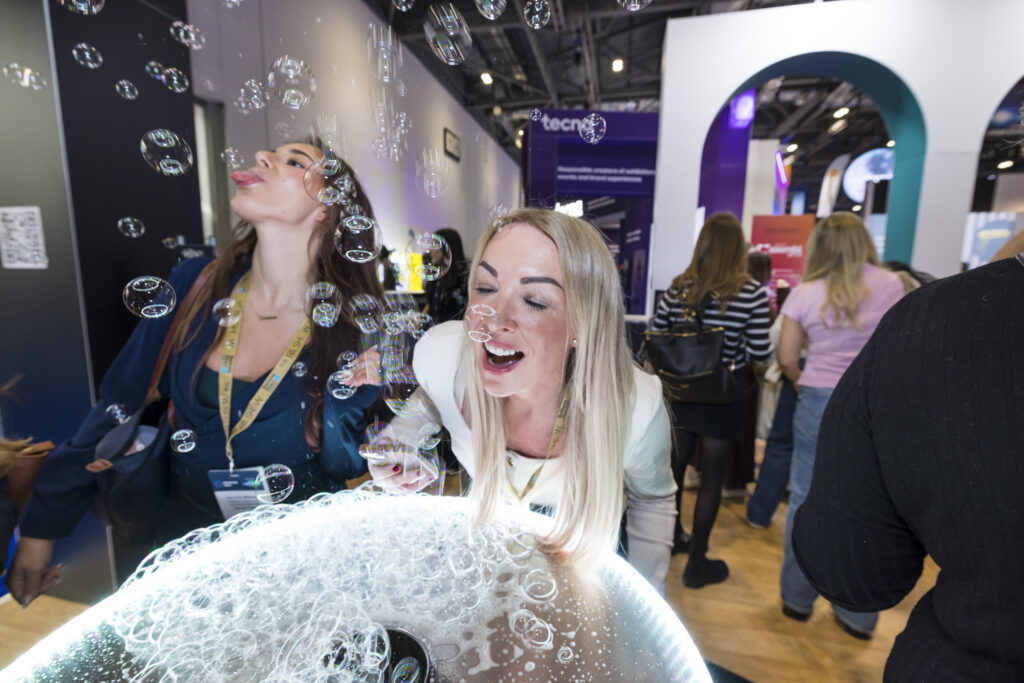
Sound is underused as an attention device on exhibition floors. Most stands are silent except for conversation. A stand with a distinctive, well-calibrated ambient soundscape – not loud, not intrusive, but present – creates a different sensory environment that visitors notice. Scent is even less commonly used and even more powerfully effective when it is appropriate to the brand. Both require restraint, but the principle is sound: stands that engage multiple senses create stronger memory traces.
Social Proof on Display
Visible evidence of credibility stops people. A large-format display of well-known client names, a real-time counter of projects delivered, a wall of brief, specific testimonials – these all trigger the social proof mechanism that makes humans pay attention to things that other humans have already validated. The key word is visible: social proof on a brochure that visitors pick up inside the stand is almost worthless. Social proof legible from the aisle, before the visitor commits to entering, is powerful.
The Staff Positioning Factor
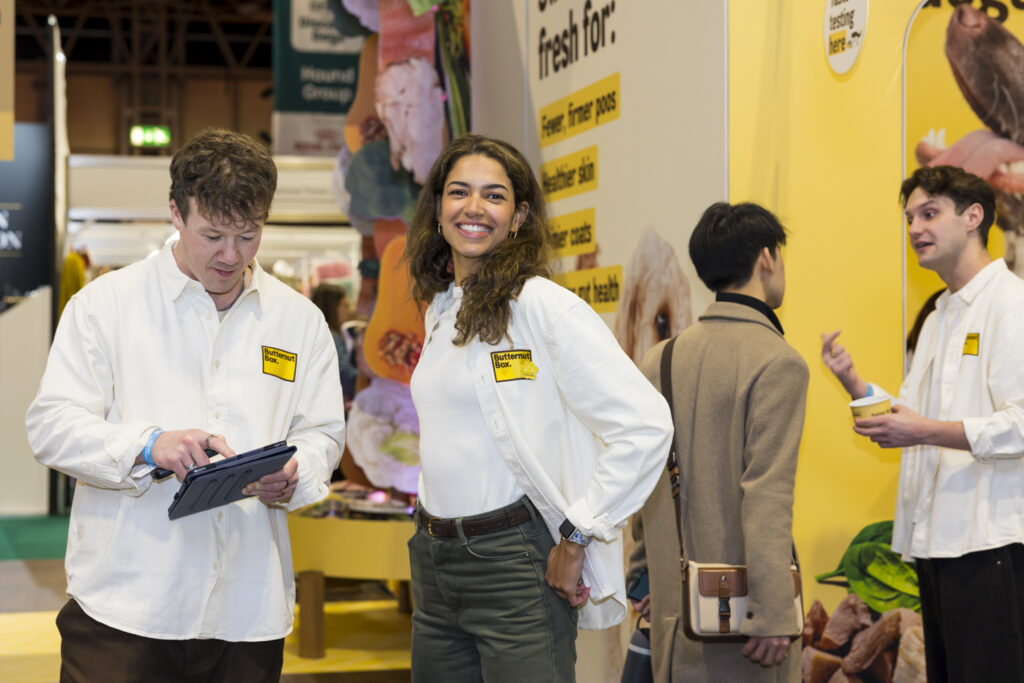
Stand design can do everything right and still fail to stop people if the team is positioned badly. Staff clustered at the back of the stand, engaged in conversation with each other, or sitting behind counters create a psychological barrier that visitors respect – they do not enter a space that feels occupied or closed. Staff positioned near the front of the stand, making easy, open eye contact with passing visitors, with a natural starting question ready, dramatically increase the stop rate from the same design.
The question staff lead with matters too. ‘Can I help you?’ is a closing question that most visitors answer with ‘just browsing’ out of habit. ‘We build stands that generate more leads than they cost – who are you exhibiting with next?’ is a conversation opener that filters immediately for the right person.
What Turns People Away
For completeness: gimmicks without relevance to the brand do not produce useful stops. A prize draw that anyone can enter, a free item that has no connection to what you do, or a game that bears no relationship to your proposition will attract footfall that has no commercial value. The stands that generate the most qualified conversations are almost always the ones where the footfall is self-selecting – where the thing that attracted the visitor was directly related to the problem your business solves.
Tecna has spent twenty years studying how people move around exhibition floors. We design stops, not just stands. If you want to talk through how your next stand can do more filtering work from the aisle, let’s have a conversation.