An Essential Tool For Events and Exhibitions
Artificial intelligence is moving from a buzzword in event industry conversations to a practical tool that is changing how exhibitions are planned, delivered, and evaluated. The applications range from visitor experience personalisation through to post-show lead scoring and sustainability reporting. Not all of them are mature enough for widespread adoption, but several are already creating meaningful commercial advantage for the exhibitors and organisers who are using them well.
Where AI Is Already Making a Difference
Personalised visitor experiences on the stand
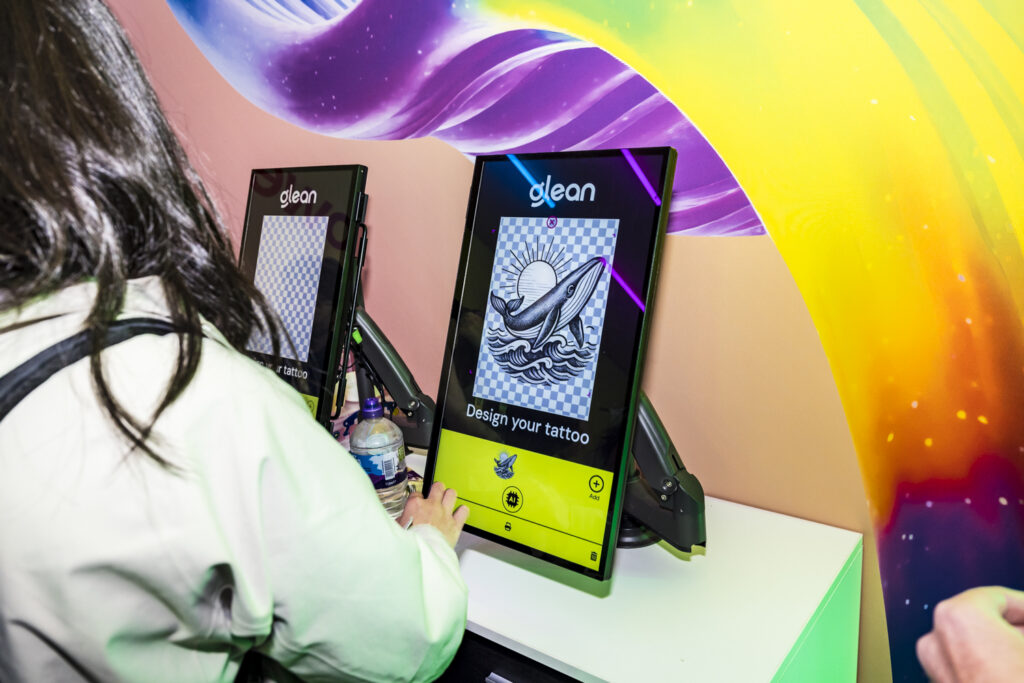
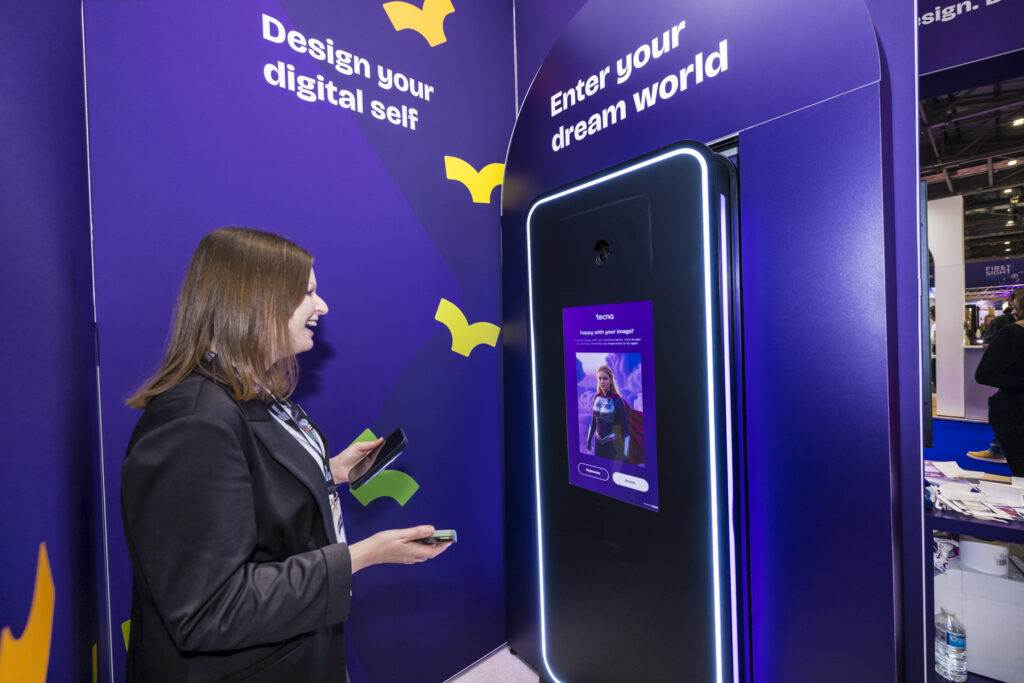
AI-powered activations that generate something unique for each visitor, a customised image, a tailored recommendation, a generated analysis based on answers to a few questions, create engagement and memorability that generic stand experiences cannot match.
These activations produce shareable, personalised outputs that visitors post on social media, extending the stand’s reach to audiences that never visit the physical event. They also create a natural data capture moment: the personalisation requires input, and that input is commercially useful.
Lead scoring and qualification
AI tools can now analyse the notes and context captured during stand conversations and assign a qualified score based on defined criteria, role, company size, intent signals, timeline language.
This removes the subjectivity from lead triage and ensures that the most commercially promising contacts are identified and followed up first, regardless of which member of the stand team recorded the interaction. Integrated with a CRM, these tools can also suggest the most relevant follow-up content for each contact based on what was discussed.
Content personalisation at scale
Post-show follow-up content, the emails, case studies, and assets sent to contacts after the event can be personalised at a scale that was previously impossible without significant resource. AI tools can generate a personalised email for each qualified contact that references their specific situation, links to the most relevant case study for their industry, and proposes a next step calibrated to their apparent stage in the buying process.
This kind of personalisation, applied consistently across a post-show contact list of 50 to 200 people, meaningfully improves conversion rates.
Show floor analytics and real-time optimisation
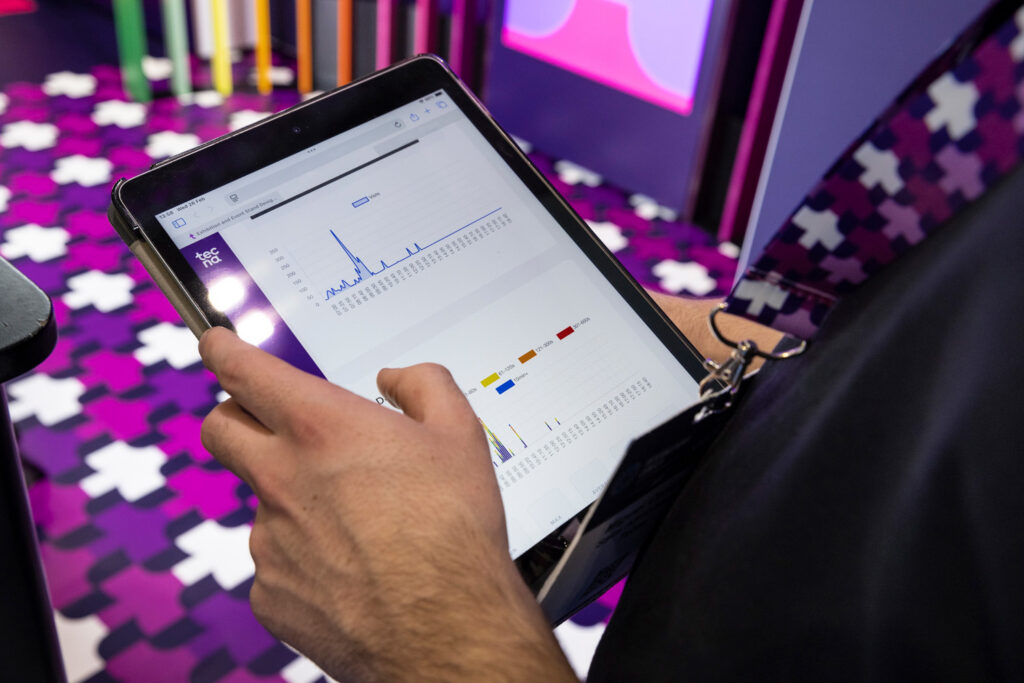
For show organisers and large exhibition presences, AI-powered analytics tools can now process real-time footfall data, from sensors, badge readers, and camera systems to identify which areas of the floor are performing well and which are not.
This allows in-show adjustments to staffing, activation, and even physical configuration. Organisers using these tools can also use the data to optimise future floor plans, positioning high-traffic features where they will generate the best outcomes across the whole event.
Sustainability measurement and reporting
AI tools are increasingly used to calculate and report on the environmental impact of events and exhibition builds. These tools can analyse material choices, logistics routes, energy consumption, and waste volumes to generate a carbon footprint for a specific project and suggest where the biggest reductions are achievable.
For clients who need to report on their events programme’s sustainability performance, this kind of automated reporting is a significant time-saver and a meaningful proof point.
AI in Stand Design and Creative Development
Generative AI tools are being used in the early stages of stand design to rapidly explore a wide range of concept directions before committing to a specific approach. This compresses the early creative phase and allows clients to react to a broader set of possibilities in less time.
We use these tools as a starting point for creative exploration, always followed by the human design expertise and production knowledge that turns a concept into a stand that works physically and commercially. AI accelerates exploration; it does not replace the judgement required to make a build work in a real venue.
Check out our AI Prompt Guide for Stand Design
What AI Is Not Ready to Replace
The human elements of exhibition performance, a great conversation between a knowledgeable team member and a prospective client, the relationship built over an afternoon at a conference, the trust created by a senior leader’s presence on a stand, are not replicable by AI and are not likely to be.
The most effective use of AI in the exhibition context is in the surrounding infrastructure: the planning, the personalisation, the measurement, and the follow-up. The core commercial event, a face-to-face human interaction in a purpose-built environment remains the thing that exhibitions uniquely provide and that AI cannot substitute for.


Getting Started With AI in Your Exhibition Programme
The practical starting point for most exhibiting businesses is not a large-scale AI deployment but a series of smaller, specific applications: a personalised follow-up email tool, a lead scoring template, an AI-powered activation on the stand. These are achievable at modest cost and test whether the principle works for your specific audience before a larger commitment is made.
At Tecna, we are actively integrating AI tools into our design process, our sustainability reporting, and our client advisory work. If you want to understand what is practically available and commercially justified for your next show, we are happy to share what we are seeing work across the market.