An exhibition stand builder is the company responsible for turning a brand’s trade show concept into a physical, functioning stand. They cover design, fabrication, project management, logistics, on-site installation, and dismantling. Most exhibitors only see the finished structure on show day. The work behind it spans months of planning and involves several distinct disciplines working as one team.
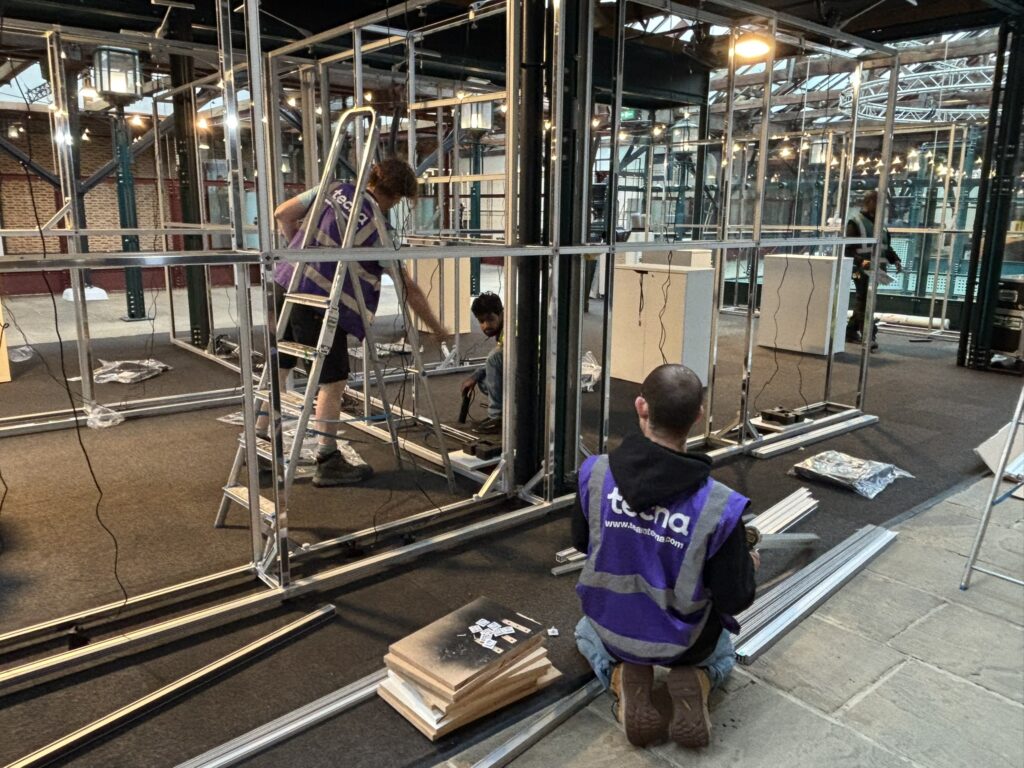
Core Responsibilities of an Exhibition Stand Builder
Design and Concept Development
The process starts with understanding a brand’s audience, its message, and what it wants visitors to feel when they walk in. A stand builder translates your strategy into a full brief and spatial concept. Layout, materials, lighting, and structure that’s consistent with the customer’s identity. They do this while working within the physical constraints of the venue and designated space.
Technical and Regulatory Expertise
Every venue has its own rules on rigging, fire safety, electrics, and structural load. Experienced builders know these requirements before the design is finalised, so we avoid costly redesigns during build-up week. This includes staying current on materials, fabrication methods, and event-technology options like AV integration and interactive displays.
Space Planning
Floor space at a trade show is expensive and limited. A well-built stand accounts for visitor flow, sightlines from the aisle, staff working areas, and storage — so the space works without feeling cramped or confusing to navigate.
Budget Management
A good builder works within a defined budget rather than around it, flagging cost trade-offs early (e.g. reusable modular systems vs. fully bespoke builds) so the client can make an informed decision rather than face surprises later.
Fabrication and Installation
This is where the design becomes physical. It includes procurement of materials, off-site construction or pre-fabrication, transport to venue, and on-site assembly, typically within a tight build-up window shared with dozens of other exhibitors on the same show floor. Great stand builders pre-build your stand and let you see it before the show.
Project Management
A stand build involves multiple moving parts: the client, the venue, contractors, suppliers, and often logistics across borders for international shows. The builder coordinates all of it against a fixed deadlines, so you shouldn’t need to worry about compliance or logistics.
Dismantling and Storage
The job isn’t finished when the show ends. Professional exhibition stand builders handle breakdown, transport, and for reusable stand systems, storage and refurbishment ahead of the next event. Your expert stand builder will also have considered sustainability, carbon reporting and landfill requirements at the planning stage and met your requirements in these areas.
Your Choice of Stand Builder Affects More Than Just Your Stand
An exhibition space is often a company’s biggest single piece of brand exposure that year. Getting it wrong doesn’t just look bad, it affects staff morale on the floor, visitor perception, and ultimately the leads and conversations the show was meant to generate.
The right stand builder should function less like a supplier and more like a partner: someone who understands the commercial goal behind the stand, not just its dimensions.
What to Look For in a Stand Builder
A portfolio in your sector or region : Venue rules, material availability, and visitor expectations vary by market
- Clear, itemised budgeting : Not just a single lump-sum quote
- In-house project management: Fewer handoffs between design, build, and install teams means fewer things get lost in translation
- A sustainability approach Reusable and modular stand systems reduce waste and cost across multiple shows, and increasingly matter to procurement teams
- Accreditations: Certifications such as ISO 20121 (sustainable event management) or ESSA membership signal a builder operates to recognised industry standards, not just internal ones
Frequently Asked Questions
What’s the difference between a stand builder and a stand designer? A designer creates the concept; an exhibition stand builder typically manages the full process end-to-end — design, fabrication, installation, and dismantling — either in-house or through a coordinated supplier network.
How far in advance should I book a stand builder? For a bespoke build, 3–6 months is standard to allow time for design iteration, venue approval, and fabrication. Modular or reusable systems often turn around faster.
Is a modular stand as effective as a custom build? Modern modular systems can be fully branded and reconfigured for different footprints, making them a strong option for exhibitors attending multiple shows a year who want consistency without rebuilding from scratch each time.
Tecna designs, builds, and manages exhibition stands and brand experiences across Europe, working to ISO 20121 sustainable event management standards. Get in touch to talk through your next stand.