Why User-Generated Content Deserves a Place in Your Exhibition Strategy
In the age of social media and smartphones, user-generated content (UGC) is becoming a vital aspect to consider in your event planning, we’ll explain why.
Walk into any exhibition hall and you’ll see significant investment at work. A huge amount of effort goes into showing up well.
What’s less visible and harder to track, but just as important, is what leaves the exhibition.
While exhibitions are built around in-person interaction, they sit within a wider marketing ecosystem. Attendees don’t just experience the event; they document their experiences, share them, and interpret them in real time. And increasingly, that layer of content, the attendee perspective, carries a lot of weight.
This is why it’s important for user-generated content (UGC) to be worked into your strategic plan whether you’re a brand with a stand, an agency, or a show organiser.
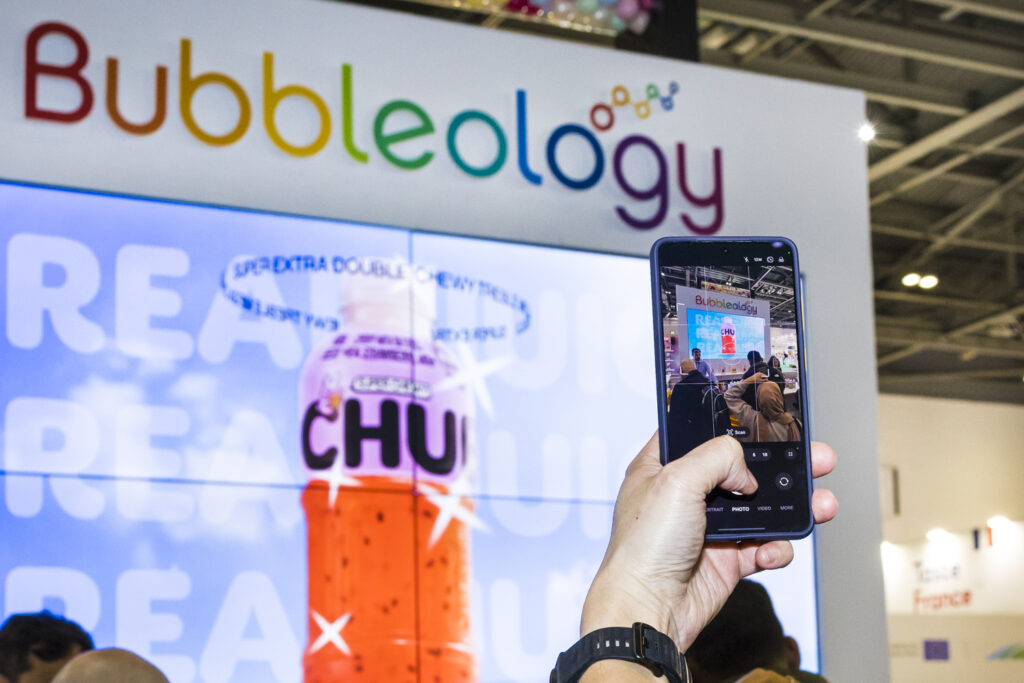
Multiple industry studies consistently find that UGC is perceived as more authentic and credible and often drives higher engagement and conversion rates than traditional marketing efforts alone. UGC functions as a form of modern word-of-mouth, it is just scaled through digital platforms, and it makes exhibition opportunities particularly interesting.
Events and exhibitions already bring together the key ingredients that make UGC effective:
- People interacting in real time
- Emotional engagement (curiosity, excitement, discovery)
- A sense of occasion or “moment”
We treat events as experiential marketing and environments for co-creation. In other words, attendees aren’t passive, they actively shape the experience. But specifically for exhibitions… Are we actively designing for this?
In many cases, UGC at exhibitions happens accidentally. An attendee takes a photo of an interesting stand, or someone films part of a demo or themselves using an activation. A speaker moment gets shared on LinkedIn. This happens and generates traffic and engagement, but they’re inconsistent, unstructured, and often disconnected from any wider objective.
Why Most Exhibition UGC Falls Flat
Without a strategy, unplanned engagement through UGC remains:
- Difficult to track
- Hard to reuse
- Limited in reach
- Potentially misaligned with brand messaging
But with a strategy, we can turn UGC into a distributed content engine that extends the life and impact of your presence at the exhibition whilst staying aligned with your messaging and goals.
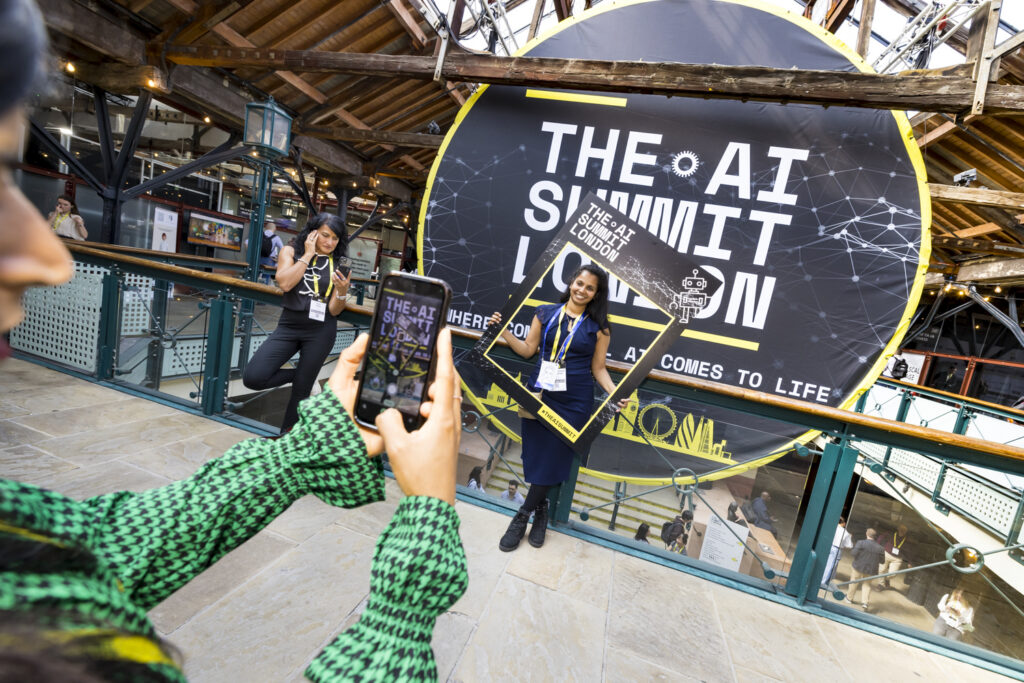
Integrating UGC effectively doesn’t require a complete rethink of exhibitions either, it just requires a small shift in how you design, brief, and activate your presence. Ultimately, it’s about moving from hoping people share something to intentionally creating moments worth sharing.
What role should UGC play in your broader marketing strategy?
For some brands, it’s about reach, extending visibility beyond the physical event into other networks. While for others, it’s about credibility, capturing testimonials, reactions, or real-world use cases. For organisers, it may be about amplifying the event itself and demonstrating value to exhibitors. Different goals lead to different types of content.
Without this front and centre, it’s easy to fall into generic tactics (hashtags, photo opportunities) that generate activity but not meaningful outcomes or direct participation which is what we’re looking to focus on.
Make It Easy: Removing Barriers to Participation
Designing for interaction in a way that naturally leads to content creation is the focus. People rarely create content about something they simply observe. They create content when they feel involved.
That involvement might come from:
- Hands-on product experiences
- Interactive demonstrations or participatory activations
- Challenges, games, or live elements
- Visually distinctive environments that feel worth capturing
The goal isn’t to force content creation; we want to create the conditions where it feels natural.
A useful test is simple: would someone have a reason to take out their phone here and capture this? If the answer is unclear, the opportunity for UGC is limited.
Even when people are willing to create content, friction can stop them. Research suggests that a significant proportion of consumers want clearer guidance from brands on what to share and how to share it. In practice, that means subtle prompts can make a meaningful difference.
At exhibitions, that might look like:
- Clear, visible calls to action
- Simple messaging around how to participate
- Staff actively encouraging content creation
- Light incentives or recognition mechanisms
None of this needs to feel forced or overly promotional. The aim is simply to remove any ambiguity.
When people understand what to do (and why) it becomes much more likely that they will act.
UGC Isn’t Just User-Led
Another common misconception is that UGC must come entirely from attendees.
In reality, some of the most valuable content comes from facilitated moments, captured by brand teams, still rooted in genuine interaction but picking up on opportunities.
That might include:
- Quick video reactions after a demo
- Short interviews or soundbites (because you already have the set up prepped)
- Captured moments of engagement on the stand
This requires a change in how teams are briefed to interact and perform on the stand. Instead of focusing purely on sales or information delivery, they also play a role in identifying and capturing content opportunities.
Done well, this doesn’t disrupt the experience, it enhances it.
From One Moment to Ongoing Value
One of the biggest strategic advantages of UGC is that its value extends well beyond the moment it’s created. It can feed into:
- Social media campaigns
- Website and landing page content
- Case studies and sales materials
- Testimonials
- Paid advertising
Given the evidence that UGC can improve trust and conversion, its long-term value is significant.
In this sense, exhibitions shouldn’t be seen as isolated events but planned in as content generation phases within a broader marketing system.
How Organisers Can Turn Events Into Content Platforms
For organisers, the opportunity is even larger. By actively enabling UGC, exhibitions can evolve from being physical gatherings into hybrid content platforms.
This can be supported through:
- Event-wide content campaigns or themes
- Shared hashtags and amplification strategies
- Spaces designed specifically for content capture
- Live displays of attendee-generated content
- Incentives that reward participation
The benefit is twofold. Exhibitors gain more visibility and measurable value, while the event itself gains reach, relevance, and longevity.
In an increasingly competitive landscape, it can be a key driver of success.
As digital and physical experiences continue to converge, the role of exhibitions is changing. They’re no longer just about what happens on the day, they’re about the value gained and then secondarily, what can be captured, shared, and reused afterwards.
UGC sits at the centre.
It offers a way to:
- Extend reach (without proportionally increasing spend necessarily)
- Build credibility through authentic voices
- Generate content that resonates more deeply with audiences
But it only delivers that value when it’s approached deliberately.
Exhibitions already create moments that matter, conversations, discoveries, reactions, these are the things that make events valuable in the first place. UGC determines whether those moments and messages stay in the event bubble… or travel much further.
The brands and organisers who build UGC into their strategy rather than layering it on afterwards are likely to turn their exhibition experiences into a more successful platform.