Everyone talks about the big stuff in exhibition design.
Stand our huge LED walls. Supersized hanging banners. Double-decker builds. Immersive tech.
But… Some of the biggest improvements to exhibiting performance come from the small details brands usually overlook.
Here are eight surprisingly small design choices that make a massive difference on the show floor.
1. Stop hiding your stand behind walls
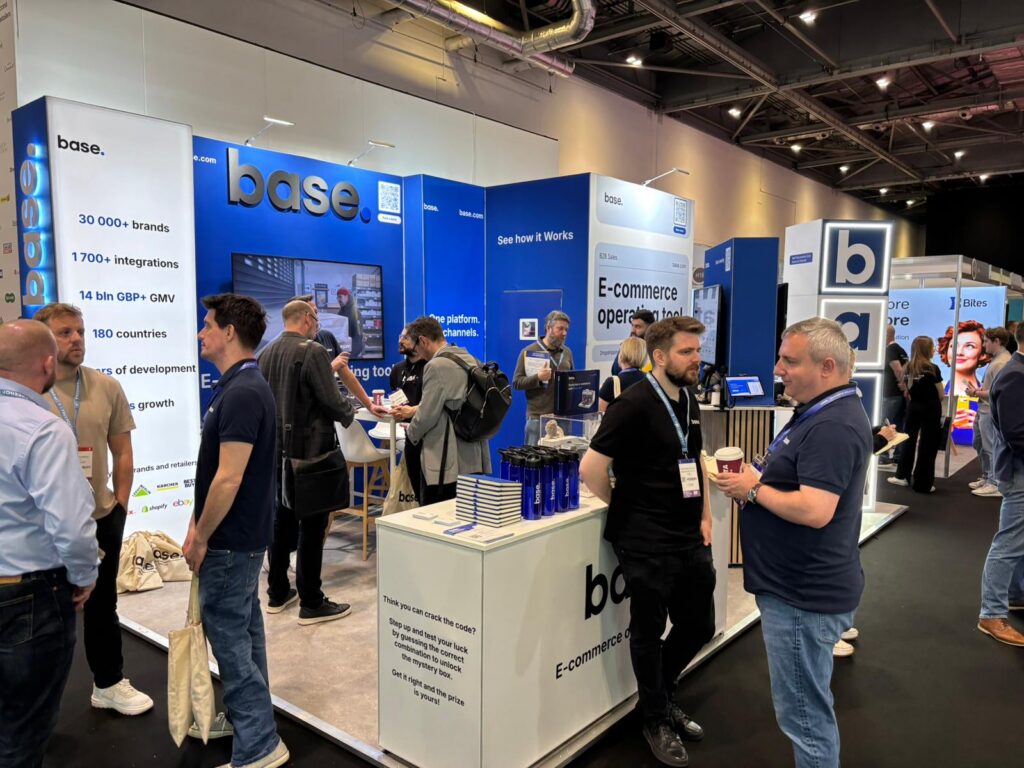
One of the quickest ways to lose footfall is making visitors feel like they need permission to enter your space.
Boxed-in layouts might look dramatic in a render and give you messaging space, but they can make stands feel closed off and intimidating.
That doesn’t mean the stand needs to be open from every angle, but visitors should instantly understand where to walk, where to look and how to start a conversation with you.
If people have to hesitate before entering to work it out, you’ve already lost momentum unless it is part of the experience you’re creating.
2. If your message takes too long to read, it won’t get read
Exhibitions are exciting, loud, distracting and overloaded with information.
Nobody is standing still analysing paragraphs of copy on your back wall.
Your messaging needs to land fast.
It needs a strong, clear tagline.
A direct value proposition.
Minimal words.
Large readable typography (ideally with a strong contrast).
Someone walking past should understand what you do in under three seconds. Clarity beats cleverness every single time on the exhibition floor.
3. Flooring changes visitor behaviour more than you think
Raised flooring is sometimes necessary in exhibition design, but make it clear.
People hesitate before stepping up onto a platform, especially in crowded aisles or fast-moving environments. It slows visitor flow, affects accessibility and can unintentionally make a stand feel less approachable.
Flush flooring or low-profile, accessible transitions create a much more natural connection between the aisle and the stand itself.
It feels easier to enter.
Easier to explore.
Easier to engage.
And during peak times, that smoother flow makes a huge difference to how the stand can handle a crowd.
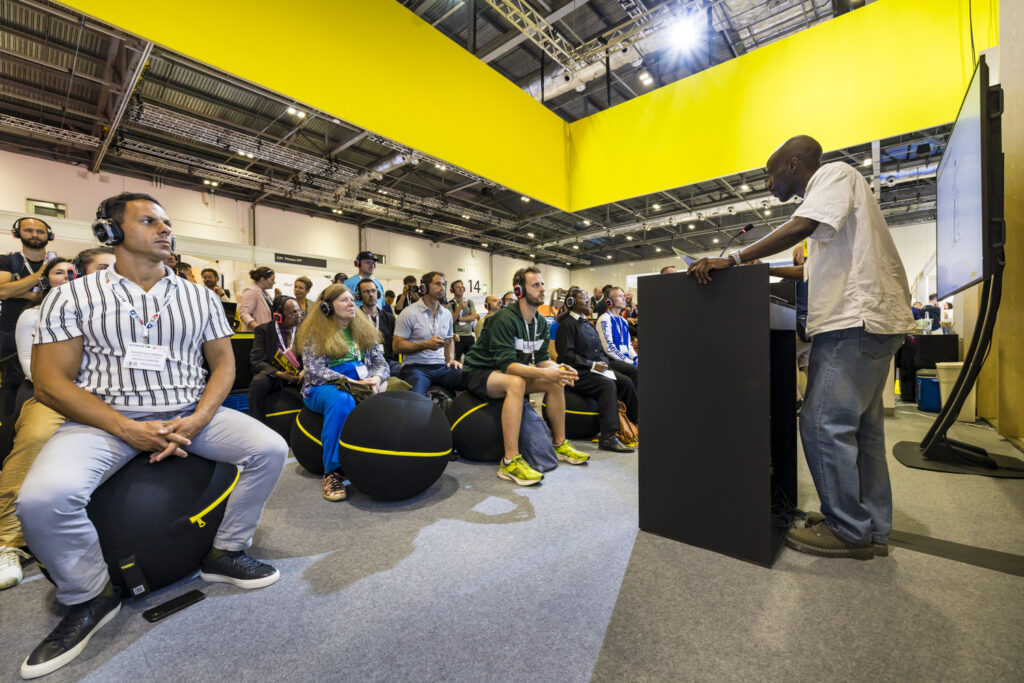
4. Seating keeps people on your stand longer
One of the most underrated tools in exhibition design? A decent place to sit and have a conversation.
Not stiff meeting chairs shoved in a corner, but proper comfortable seating that encourages people to pause.
Exhibitions can be exhausting. People are walking for hours, carrying bags, rushing between meetings and constantly processing information.
If your stand gives visitors a moment to stop and reset when they’re talking to you, they naturally stay longer.
And longer dwell time usually means:
• Better Conversations
• Better lead quality
• Better engagement
• Better ROI
Simple as that.
5. Lighting should guide attention, not fight for it
Bad lighting ruins good stands. We all remember the dark days of Abercrombie where you had no idea what colour the clothes were that you purchased until you exited the shop.
Overlit spaces feel clinical.
Dark stands can disappear completely in this kind of environment. They can also make you feel sleepy.
Random spotlights can also cause issues if they are pointed directly at visitors entering the stand. Instant interrogation room energy.
Good lighting should lightly guide people through the experience.
Highlight key products.
Draw attention to hero moments.
Create warmth.
Add depth.
Help visitors know where to focus naturally.
If done well, it should be something you barely notice, but your photos will look amazing.
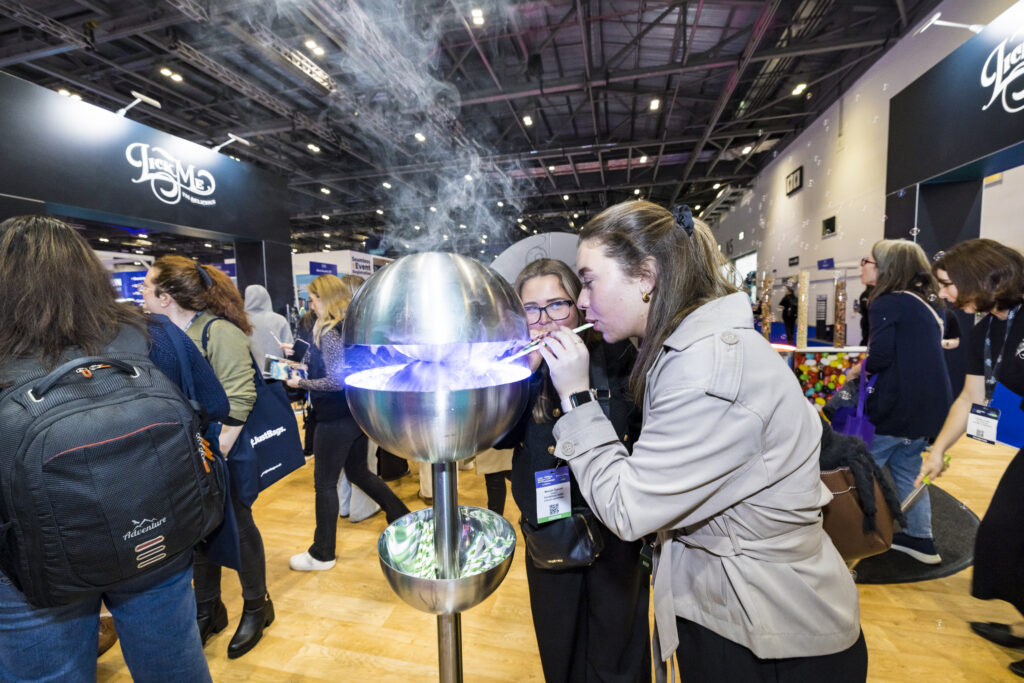
6. Give people something to touch
People remember experiences far more than static non-interactive displays, so always try to include something interactive.
That doesn’t mean you need expensive immersive tech or giant installations.
Sometimes it’s simply:
• Product Demos
• Physical Samples
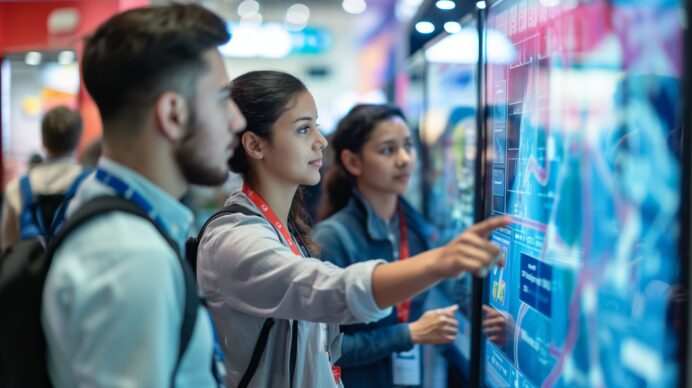
• Interactive screens
• Working prototypes
• Hands-on experiences
The moment visitors physically engage with something; the interaction becomes more memorable. It is also much easier to relax into a conversation.
Memorable experiences also create better conversations long after the show ends, we all want that user generated content!
7. Plan for crowds, not empty renders
This one is a bit of a catch-22 but roll with us here. One of the biggest exhibition design mistakes brands make is approving a stand based on how it looks empty.
People gather.
Queues form.
Crowds block sightlines.
Traffic changes throughout the day.
A stand that looks incredible empty can become chaos with a large crowd if movement hasn’t been considered properly.
Aim to design around real visitor behaviour:
• Wide walkways
• Space around demos
• Multiple interaction points
• Clear visitor flow
• Spaced seating areas with tables at the right height
• Room for staff movement during busy periods
The real test is how well your stand can cope when it is busy.
8. Clutter kills premium experiences
An easy one to end on but you would be surprised how often this happens. Nothing destroys a premium exhibition experience faster than visible mess.
Boxes under counters.
Coats over chairs.
Cable mess.
Half-eaten lunch hidden behind a monitor.
Wrappers that never made it to the bin.
Random leaflets everywhere by midday.
Visitors notice clutter immediately, even subconsciously, and messy stands reduce trust in the brand itself.
Smart integrated storage, hidden charging areas and clean cable management make an enormous difference to how polished the experience feels throughout the day.
Why not find out more about how we can bring your event or exhibition stand to life?