Well trained exhibition stand staff are skilled in 5 key areas: Setting clear objectives, profiling target visitors, mastering conversation openers & structure, defining and capturing qualified leads, and knowing when to hand a conversation over to a specialist.
This training (along with logistics like floor plans and lead handling) should be completed at least two weeks before the show, with a refresher session 24 hours before to keep the team sharp.
What Training Actually Needs to Cover
Exhibition stand training is distinct from general sales training. The context is different: high volume, short interactions, a noisy environment and factoring in physical tiredness. The skills required are also specific. Effective stand staff training covers five areas:
• Objectives & context
• Visitor profiling
• Conversation mechanics
• Qualification & capture
• Handover process
Lets look at each of these in more detail:
Objectives and Context
Every member of the stand team should be able to answer three questions before the show opens:
“What are we here to achieve?“
“Who are we trying to talk to?“
“What does a successful day look like in specific terms?“
These sound obvious, but a significant proportion of exhibition teams cannot answer them.
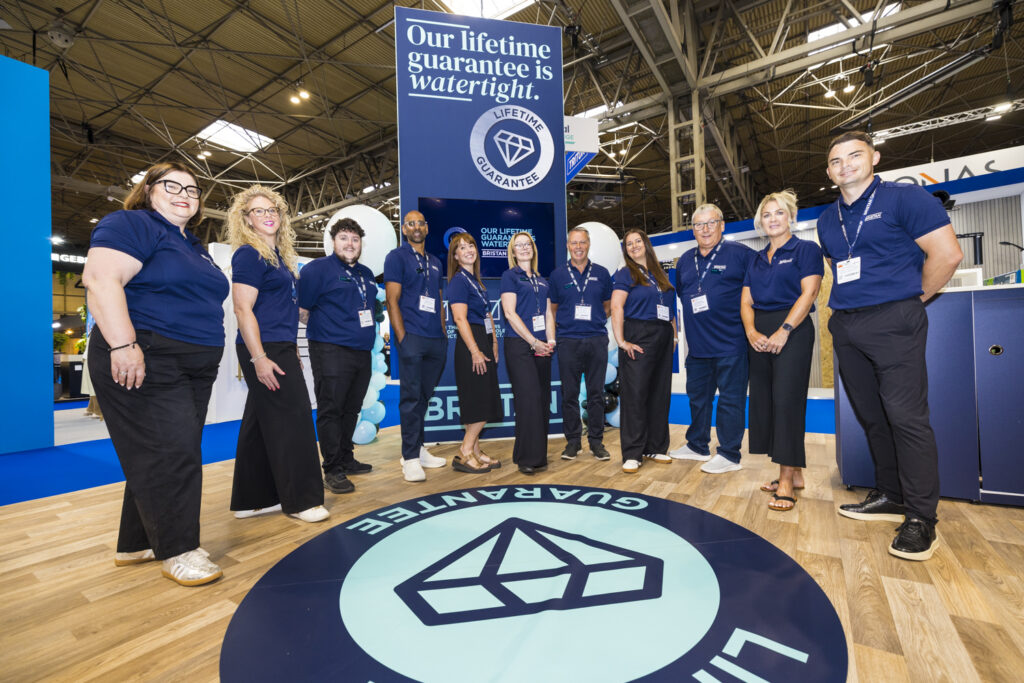
Setting explicit targets for example, 25 qualified conversations per day, then sharing them with the whole team creates a shared commercial frame that changes how people operate.
Visitor Profiling
The team needs to know not just who the ideal visitor is in broad terms, but how to identify them quickly in practice. Which job titles are they likely to carry? What language do they use about the problems your business solves? What signals indicate they are worth investing time in?
Equally important, what signals indicate they are not the right conversation? Knowing this can allow the team to close gracefully and move on without wasting either party’s time
Conversation Mechanics
The opening question is the highest-leverage moment in a stand interaction.
Train the team away from ‘Can I help you?‘ (which invites an answer of ‘I’m just browsing’) and towards openers that are specific, relevant, and slightly provocative in a useful way.
‘We work with marketing managers who are tired of not being able to prove their exhibition ROI. Does that sound familiar? ‘ is a question that qualifies and engages simultaneously. The team should have two or three of these ready, practised until they feel natural, not scripted.

After the opening, the conversation structure should move through a brief qualification; what are they working on, what is the timeline, who else is involved in the decision? Then you can before move to a relevant demonstration or discussion of your proposition.
This is not a full sales process; it is a brief conversation that either creates a clear next step or ends efficiently.
Qualification and Data Capture
Define a qualified lead before the show, not during it.
Train the team on the specific questions that determine whether a visitor meets the qualification criteria. Then train them on the capture process: what information is recorded, in what format, and with what notes.
A CRM entry that records the visitor’s role, company, specific challenge, timeline, and agreed next step is the foundation of a conversion.
Handover and Escalation
Not every conversation should be handled by the same person. Train the team on when to escalate to a senior team member or technical expert, and how to do it smoothly without making the visitor feel passed off.
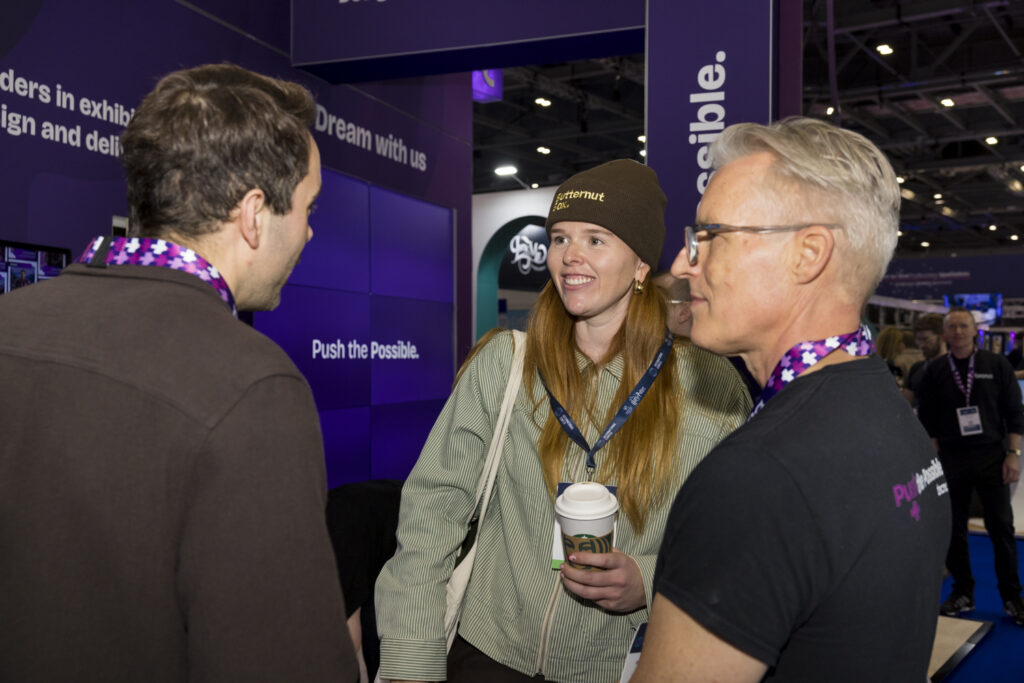
A well-executed handover (‘Let me bring over our head of design who worked on exactly this problem for a similar business‘) increases the visitor’s experience and the quality of the conversation simultaneously.
The Logistics That Training Should Cover
Beyond the commercial conversation skills, stand staff also need to know:
• The floor plan and where everything is.
• Opening & closing times, including any mandatory events during the day.
• Where the leads go at the end of each day (if not using digital capture).
• The escalation process for complaints or problems.
• The end-of-day debrief process.
These operational details are easy to overlook and create avoidable chaos on the day.
When to Train
Training should happen no later than two weeks before the show, with a refresher 24 hours before
The two-week window allows enough time for the team to internalise the material and practise the conversations. The day-before refresher brings the objectives and specifics back into focus after any intervening responsibilities.
Something to Consider
Stand staff training is one of the most neglected areas of exhibition preparation, and one of the highest-return improvements available to most exhibiting businesses.
A stand costing £40,000 to design and build can have its commercial impact halved by a team that has not been prepared to use it properly. Equally, a modestly designed stand operated by a well-briefed, confident team will consistently overachieve its targets and ROI.
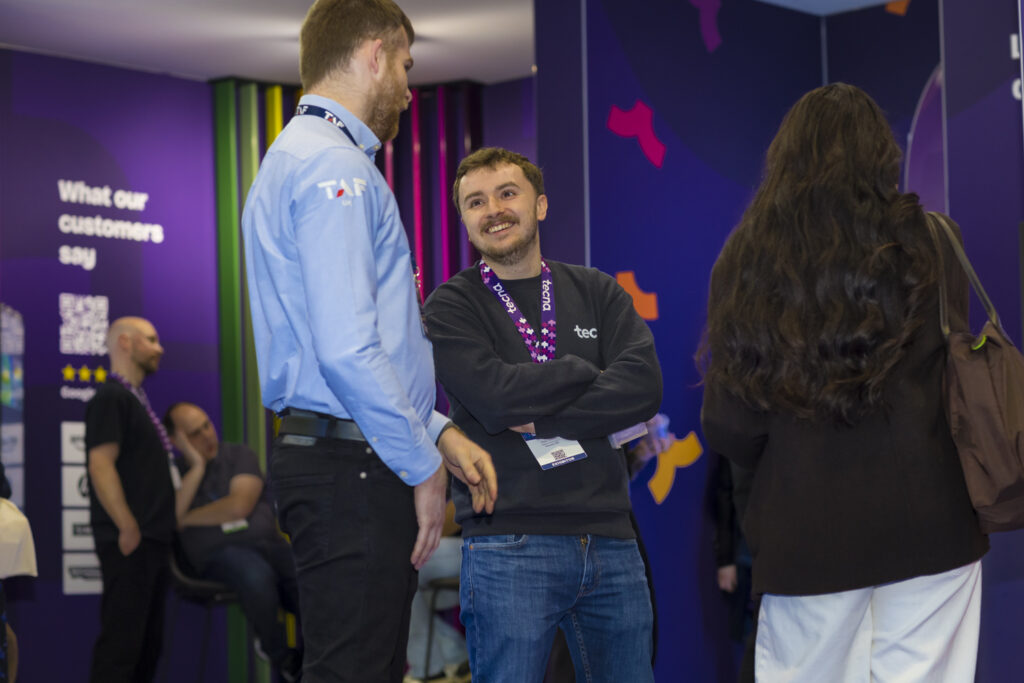
Tecna builds pre-show staff briefing support into our client relationships for all priority projects.
If you are interested in the commercial difference a well-prepared team could make to your exhibition goals, click here to talk with our team of experts.
Want to be the first to see our latest articles, updates and news? Sign up to our newsletter below