Brands spend enormous amounts getting people into the room.
We’ve normalised exhibition environments that feel specific to what we think they should have, rather than prioritising the human element. Think bigger screens, more immersive screens. Louder messaging. Endless visual stimulation. The assumption being that winning attention (and sheer sensory overload?) is the aim of the game.
However, walk through Cannes Lions this year and we think you’ll see the opposite. You’ll see exceptional brands calming things down.
Creating lounges instead of stages, prioritisation of conversations instead of presentations. Spaces that feel culturally aware, socially intuitive and emotionally intelligent.
Experiential design is the practice of crafting environments that engage people on multiple sensory and emotional levels. It makes every moment meaningful and memorable.
Brands understanding this are treating the design of exhibition stands and shows as behavioural environments, intentionally shaping the context in which people interact.
There’s a difference between attention and engagement.
Attention gets somebody to stop briefly. Engagement is more about feelings, and feelings matter commercially far more than marketers sometimes like to admit.
The Ehrenberg-Bass Institute has long argued that memory structures drive future buying behaviour. People buy brands they remember easily and feel familiar with. Live environments accelerate that process because physical experience creates emotional encoding in ways digital channels simply cannot.
That’s why events are becoming strategically important again, as an antidote to digital fatigue.
Buyers are navigating AI-generated outreach, over-automated funnels, recycled LinkedIn “thought leadership”, and performance marketing ecosystems optimised to chase them around the internet for downloading a whitepaper eighteen months ago.
Most B2B communication now feels frictionless. Physical environments cut through because they restore texture.
Atmosphere. Body language. Spatial memory. Unexpected conversation. Social energy.
These are not soft metrics either, it would be a mistake to think they don’t influence trust formation, recall and decision-making.
There are five major categories of experiential design, which provide context for the experience being designed and the environment in which it lives. Understanding these categories helps brands and marketers plan more effective and immersive experiences.
The future of exhibition design sits much closer to hospitality design than traditional marketing. The designs at Cannes will feel generous. People stay longer in environments where they feel psychologically comfortable and recent experiential marketing research continues to show strong links between dwell time, emotional engagement and brand recall. The longer somebody remains willingly immersed in a branded environment, the stronger the memory association becomes. Successful projects are achieved through close collaboration with clients and a clear understanding of the context and objectives for each installation.
Which means the question marketers should probably be asking is not: “How do we dominate the floor and stand out?”
But: “How do we make people feel so good they want to stay?”
With this mindset change, the important details become developing a plan and vision for each experiential design project, ensuring alignment with clients’ goals and the context of the installation.
This includes:
• flow
• acoustics
• seating dynamics
• openness
• lighting temperature
• hospitality integration
• emotional pace
• social comfort
Developing a content strategy early in the project is also crucial for achieving long-term success and ensuring the experience resonates with both clients and audiences.
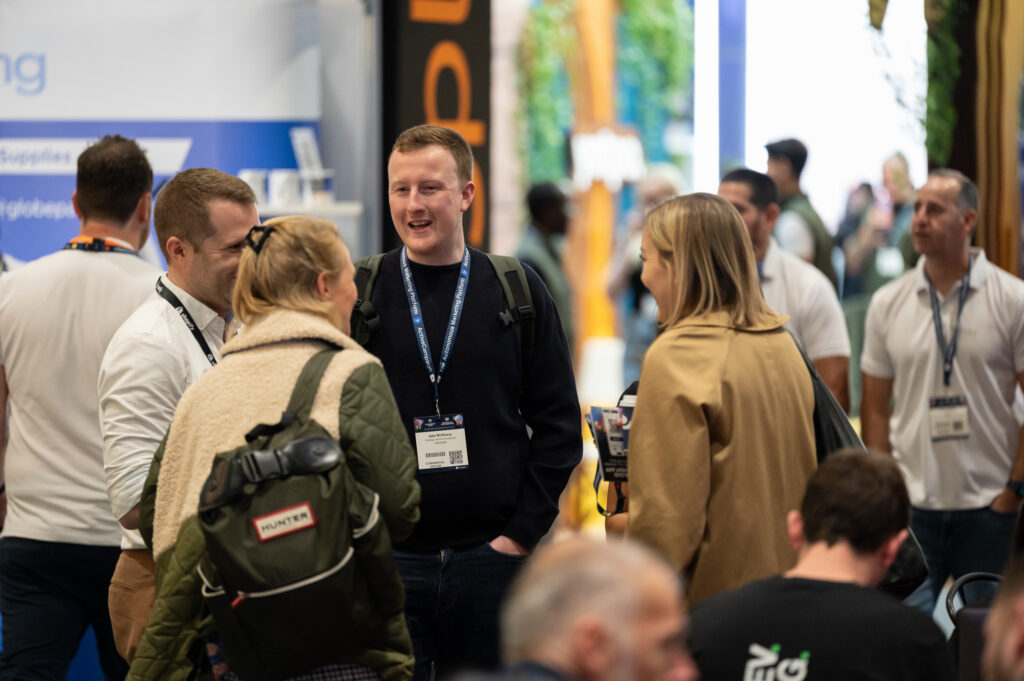
The stand starts behaving like an experience and that’s where commercial value is created. Brands are no longer treating exhibitions as temporary sales environments; they’re treating them as expressions of brand world-building. That’s why marketing’s future increasingly belongs to brands that understand experience design as a deliberate practice.
Summary: The Shift to the Experience Economy
Across the world, a profound shift is underway: people are placing greater value on unique, memorable experiences rather than material possessions. This evolution has given rise to the experience economy, where engaging interactions and immersive environments are at the heart of what audiences seek. Nowhere is this more evident than at the Cannes Lions International Festival, held annually at the iconic Palais des Festivals in France. Here, the creative community gathers to celebrate groundbreaking ideas, showcase interactive installations, and honor the best in experiential design. The festival stands as a prime example of how brands and creators are reimagining engagement. By transforming ordinary spaces into vibrant, interactive worlds that captivate and inspire audiences.
Why Experiences Matter More Than Ever
In today’s digital-first landscape, experiences have become more valuable than ever because they forge emotional connections and create lasting memories. People crave moments that are not only engaging but also shareable—fueling the rise of experiential design as a cornerstone of modern marketing. Exhibition design, for example, has evolved into a powerful tool for brands to showcase their products, services, and ideas in ways that are both interactive and unforgettable. By leveraging interactive installations, cutting-edge technology, and compelling storytelling, designers can create exhibitions that invite visitors to explore, participate, and connect on a deeper level. These immersive experiences don’t just capture attention—they spark conversations, build loyalty, and leave a lasting impression in a crowded digital world.
Designing Engaging Spaces
Crafting truly engaging spaces starts with a deep understanding of the audience, the message, and the environment. Exhibition design is about more than just aesthetics; it’s about creating three-dimensional space that tells a story and evokes emotion. Events like Cannes Lions, designers use a thoughtful combination of graphics, lighting, and technology to transform environments into immersive experiences. Interactive installations displayed throughout the festival invite visitors to engage with the narrative, making each moment memorable and meaningful. By focusing on how people move through and interact with the space, designers ensure that every element, from lighting to layout, works together to communicate the message and create a sense of immersion. The result is an environment that not only showcases ideas but also fosters genuine engagement and connection.
The Role of Technology in Shaping Experiences
Technology is revolutionizing the way we experience and interact with spaces, opening up new possibilities for creativity and engagement. From dynamic digital displays to immersive virtual reality environments, technology allows designers to craft experiences that are both interactive and deeply personal. Digital systems and symbolic elements can be woven into the environment to create a sense of movement and responsiveness, adapting to the needs and interests of visitors in real time. This integration of technology enhances the narrative, making the experience more engaging and memorable. Whether it’s through interactive installations or innovative use of digital imagery, technology empowers brands to deliver unique, immersive experiences that resonate with audiences and set new standards for exhibition design.
Storytelling and Emotional Connection
At the core of every memorable experience is a compelling story. Storytelling in experiential design goes beyond words, it’s about creating a narrative that visitors can see, hear, and feel. By combining creative ideas with powerful imagery, evocative music, and carefully designed lighting, designers can craft environments that stir emotions and foster a sense of connection. The Cannes Lions festival is a testament to the power of storytelling. It celebrates work that pushes the boundaries of creativity and innovation. Award-winning installations at the festival demonstrate how a well-told story, supported by thoughtful design and engaging techniques, can leave a lasting impact on audiences. By understanding what resonates with visitors, designers create experiences that not only entertain but also inspire, building a sense of community and belonging that endures long after the event ends.